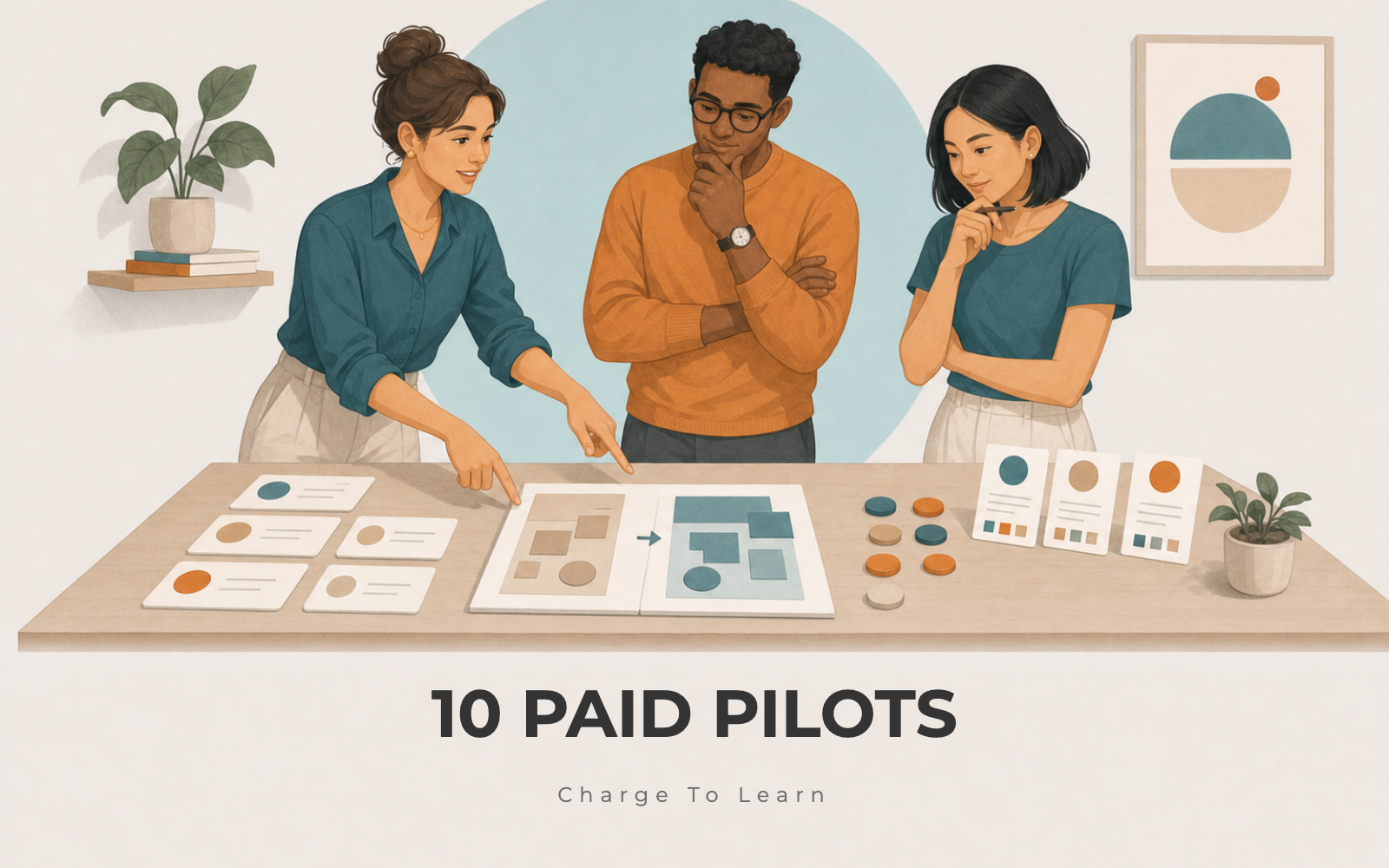
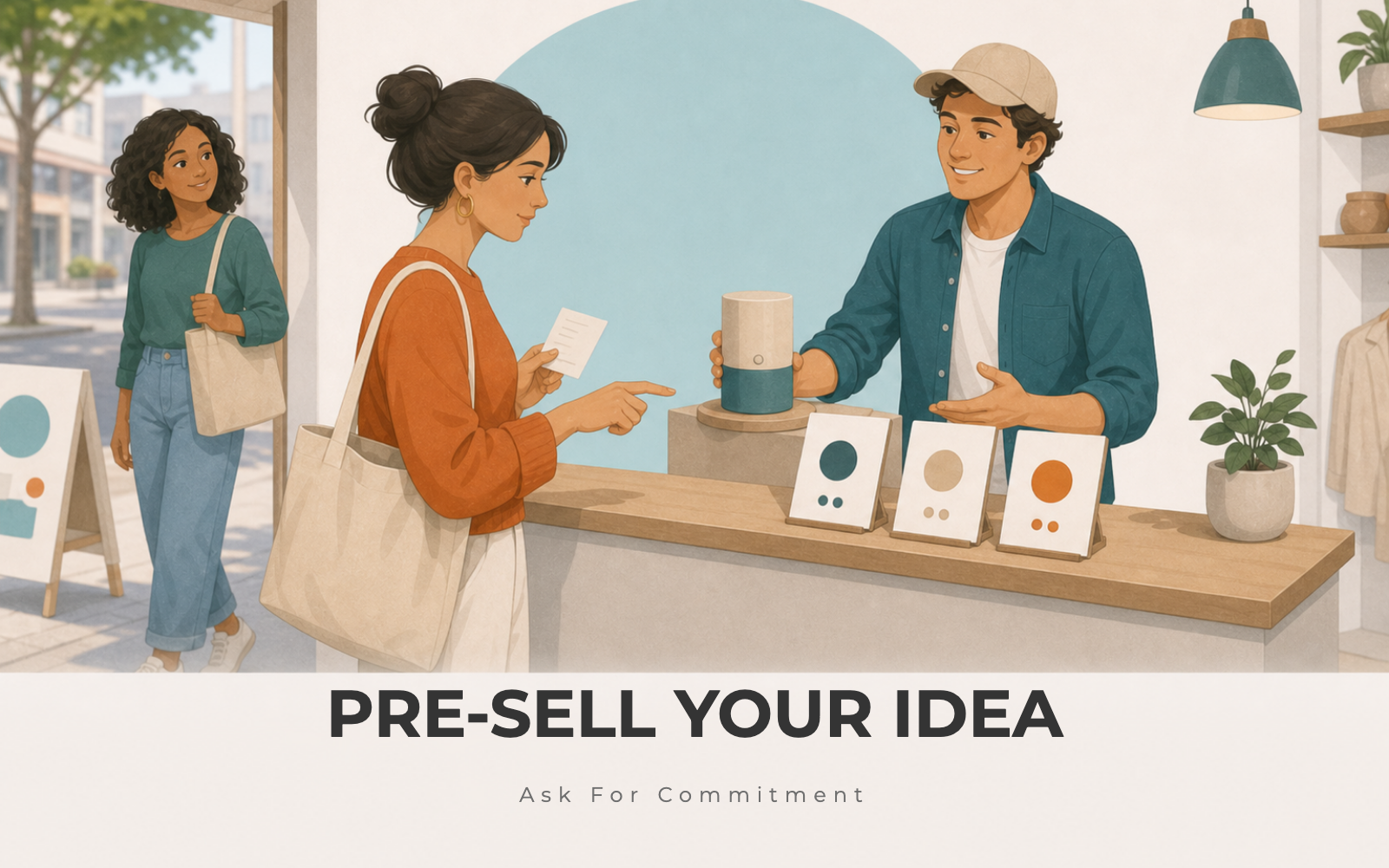
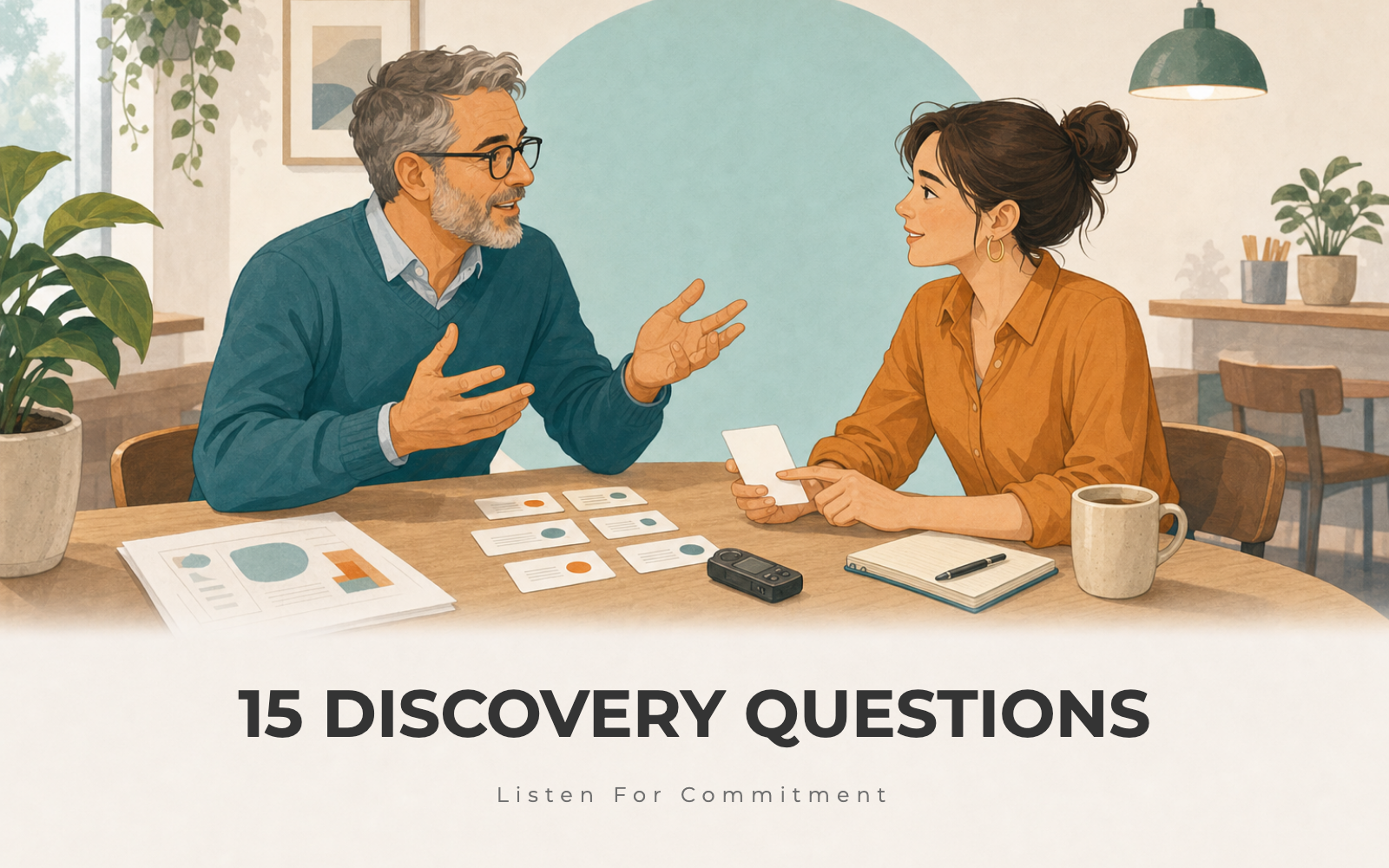
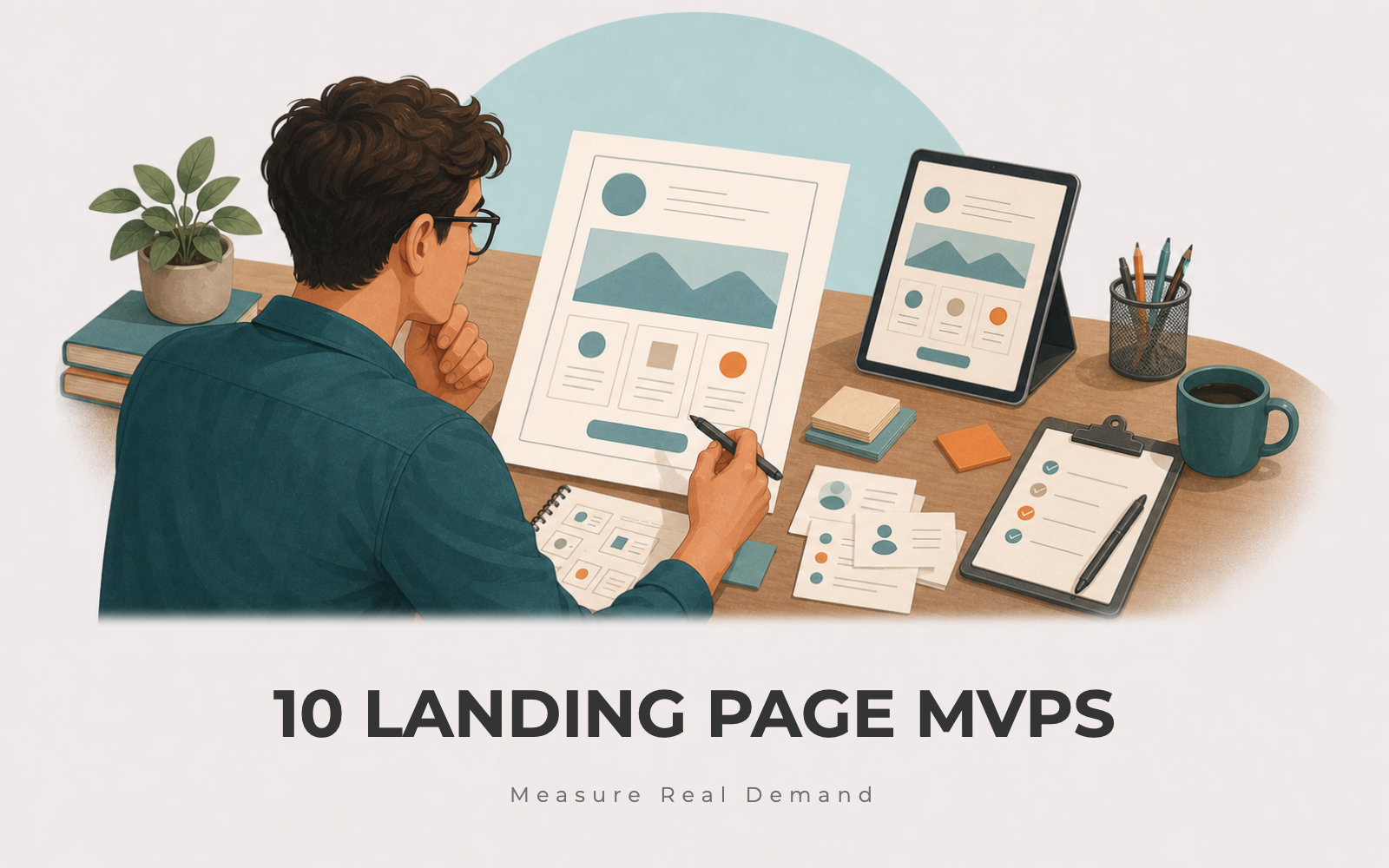
10 Paid Pilot Examples for B2B Startups (2026)
Ten concrete 2026 B2B pilot structures with buyers, boundaries, prices, evidence targets, and conversion paths.
Customer discovery, validation, MVPs, product strategy, and iterative delivery methods for learning before overbuilding.

Ten concrete 2026 B2B pilot structures with buyers, boundaries, prices, evidence targets, and conversion paths.

A practical 2026 path from problem interviews to deposits, paid pilots, or preorders—without pretending an unfinished product already exists.

A behavior-first 2026 interview guide for separating polite interest from urgent problems, active budgets, real authority, and concrete next steps.

Ten landing-page tests mapped to the audience, promise, traffic source, call to action, evidence threshold, and next decision.

A 2026 guide to turning repeated service delivery into software only after the workflow, buyer, and value are proven.

Ten pre-build questions for reconstructing the customer's real workflow, constraints, exceptions, and smallest useful test.

Ten responsible product-like tests showing the user experience, manual operation, disclosure boundary, success metric, and automation decision.

A 2026 validation process for founders starting from zero reach, using direct customer learning instead of audience size.

Ten concrete concierge MVPs with customer inputs, manual delivery steps, pricing hypotheses, evidence thresholds, and automation decisions.

A 2026 field guide for matching the MVP format to the real startup risk before committing to a full AI product.

A prototype explores how a concept should work; an MVP tests a customer or business hypothesis through real use. Compare purpose, evidence, scope, and risk.

Move from problem evidence to commitment, paid pilots, repeat use, and scalable economics with a practical validation sequence and honest limits for every signal.

Generate product ideas from customer evidence, score them by consequence, reach, feasibility, and testability, then leave the workshop with one owned experiment.

Explore 10 practical MVP formats—from concierge delivery and paid pilots to single-feature software—with the hypothesis, evidence, and failure mode for each.

An iterative process repeats a cycle to revise an existing result using evidence. Learn how it differs from incremental delivery and when startups should use both.

Apply Steve Blank’s four-stage Customer Development model with hypotheses, fieldwork, evidence gates, and clear links between discovery, validation, creation, and company building.

Idea generation is the deliberate production of multiple possible solutions before evaluation. Use practical methods, prompts, and a worked startup exercise.

A proof of concept tests feasibility, a prototype tests a proposed experience, and an MVP tests customer value. Choose from the uncertainty—not a fixed sequence.

Use Doblin’s 10 Types of Innovation to find opportunities beyond product features, combine complementary moves, and choose a test your startup can run now.

Forecast a product idea with mechanism-specific formulas, evidence grades, base and downside scenarios, cost estimates, ethical demand tests, and explicit uncertainty.
Most founders are overworked, under-resourced, and forced to build without the operating sequence. 100 Tasks AI turns Martin Bell's 120+ launch process into a 100-task checklist, AI co-founder, Powersheets, and dashboard so you can launch and scale 3-5x faster.