Martin Bell11 Min Read
10 Wizard-of-Oz MVP Examples for AI Startups (2026)
A 2026 guide to testing AI product promises manually so founders can prove behavior before automation.
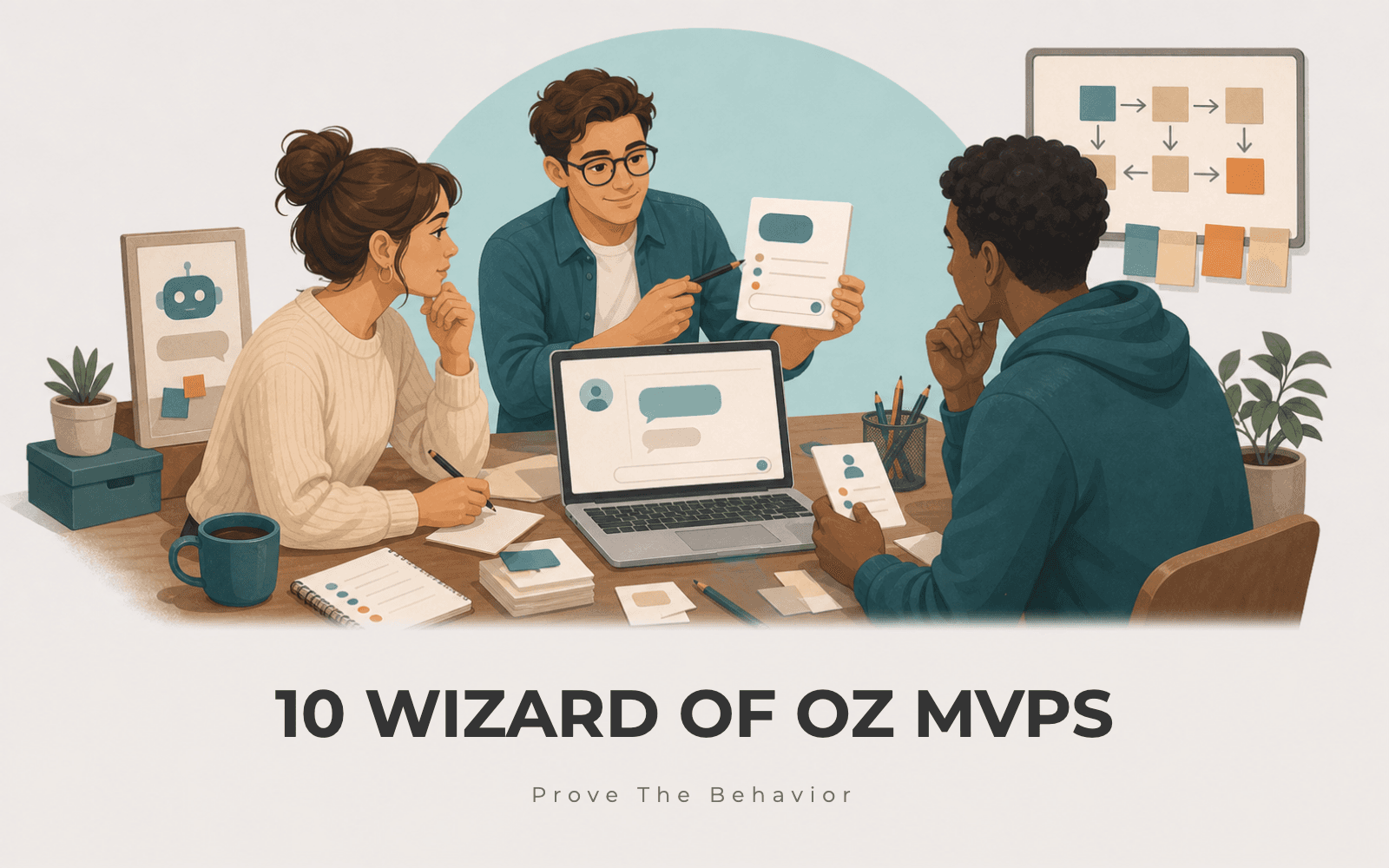
A Wizard-of-Oz MVP makes a product look automated while humans quietly deliver the core behavior behind the scenes. For AI startups, this is often the smartest first test because the riskiest question is not whether a model can produce something. It is whether users trust, use, and pay for the result in context.
In 2026, founders can wire impressive demos quickly. That makes it easier to confuse a technical demo with product validation. A Wizard-of-Oz test keeps the focus on behavior: what does the user expect, what do they correct, what do they ignore, and what quality level is required?
Use these examples to test the promise before building the machine.
Key Takeaways
-
Wizard-of-Oz MVPs are best when trust, accuracy, workflow fit, or user behavior is the biggest risk.
-
Be careful about disclosure, privacy, and user expectations when humans are involved.
-
Track corrections and edge cases because they become the product requirements.
-
Do not keep the manual layer forever; decide what should be automated after the test.
-
The test should validate a customer behavior, not only technical possibility.
How to Run a Responsible Wizard-of-Oz Test
Define what users believe the product does, what humans will do behind the scenes, and what you will disclose. In sensitive areas, clear disclosure and consent matter more than conversion.
Track every handoff. Which inputs were missing? Which outputs needed human review? Which requests were outside scope? Which errors would damage trust? These notes are more valuable than a polished demo.
The test is successful when it tells you what the automation must do, what humans should keep reviewing, and whether the user values the outcome enough to continue.
1. AI Sales Assistant Test
This idea serves founders and sellers who need better follow-up timing and message drafts. The promise is to recommend who to follow up with and draft a context-aware message. That matters because the customer is not buying an abstract tool or a clever business model. They are buying a cleaner version of a painful job they already recognize.
The first version should stay deliberately small: manually review the pipeline each morning and send suggestions through a simple interface. Use AI where it helps with research, drafting, sorting, or summarizing, but keep human judgment in the final delivery. Early customers are paying for a useful result, not for unreviewed output.
The validation signal is that users send the messages, get replies, and keep checking the assistant. If that signal appears more than once, you can improve the package, write the delivery checklist, and decide whether the offer should become a productized service, template, or software wedge.
Avoid automating spam or ignoring relationship context. That mistake makes the business look larger while making the actual learning weaker.
2. AI Tutor Test
This idea serves learners who need guided practice and explanations adapted to mistakes. The promise is to give feedback that feels personal and helps the learner improve one skill. That matters because the customer is not buying an abstract tool or a clever business model. They are buying a cleaner version of a painful job they already recognize.
The first version should stay deliberately small: have humans review answers and send structured feedback through the product shell. Use AI where it helps with research, drafting, sorting, or summarizing, but keep human judgment in the final delivery. Early customers are paying for a useful result, not for unreviewed output.
The validation signal is that learners return for practice because the feedback helps them progress. If that signal appears more than once, you can improve the package, write the delivery checklist, and decide whether the offer should become a productized service, template, or software wedge.
Avoid pretending the system can teach topics it cannot reliably assess. That mistake makes the business look larger while making the actual learning weaker.
3. Legal Intake Assistant Test
This idea serves founders organizing legal facts before talking to a qualified professional. The promise is to turn scattered facts and documents into a clearer intake packet. That matters because the customer is not buying an abstract tool or a clever business model. They are buying a cleaner version of a painful job they already recognize.
The first version should stay deliberately small: manually sort the intake and label open questions without giving legal advice. Use AI where it helps with research, drafting, sorting, or summarizing, but keep human judgment in the final delivery. Early customers are paying for a useful result, not for unreviewed output.
The validation signal is that users say the professional conversation became faster and clearer. If that signal appears more than once, you can improve the package, write the delivery checklist, and decide whether the offer should become a productized service, template, or software wedge.
Avoid creating legal advice risk or implying a professional has been replaced. That mistake makes the business look larger while making the actual learning weaker.
4. Travel Planner Test
This idea serves travelers who want personalized itineraries without research overload. The promise is to recommend a plan that respects preferences, constraints, and tradeoffs. That matters because the customer is not buying an abstract tool or a clever business model. They are buying a cleaner version of a painful job they already recognize.
The first version should stay deliberately small: humans research and assemble itineraries while the interface collects preferences. Use AI where it helps with research, drafting, sorting, or summarizing, but keep human judgment in the final delivery. Early customers are paying for a useful result, not for unreviewed output.
The validation signal is that travelers use the plan, request revisions, and pay for another trip. If that signal appears more than once, you can improve the package, write the delivery checklist, and decide whether the offer should become a productized service, template, or software wedge.
Avoid generic recommendations that ignore constraints like timing, budget, and energy. That mistake makes the business look larger while making the actual learning weaker.
5. Recruiting Matcher Test
This idea serves small teams screening candidates for a specific role. The promise is to surface likely-fit candidates with reasons and interview prompts. That matters because the customer is not buying an abstract tool or a clever business model. They are buying a cleaner version of a painful job they already recognize.
The first version should stay deliberately small: humans score candidates against a transparent rubric behind the product. Use AI where it helps with research, drafting, sorting, or summarizing, but keep human judgment in the final delivery. Early customers are paying for a useful result, not for unreviewed output.
The validation signal is that hiring managers trust the shortlist and use the interview prompts. If that signal appears more than once, you can improve the package, write the delivery checklist, and decide whether the offer should become a productized service, template, or software wedge.
Avoid opaque rankings that cannot be explained or checked for bias. That mistake makes the business look larger while making the actual learning weaker.
6. Finance Forecast Assistant Test
This idea serves founders who need a simple monthly forecast but hate spreadsheet modeling. The promise is to turn revenue, cost, and hiring assumptions into a clear runway view. That matters because the customer is not buying an abstract tool or a clever business model. They are buying a cleaner version of a painful job they already recognize.
The first version should stay deliberately small: manually build the model from intake answers and return a simple dashboard. Use AI where it helps with research, drafting, sorting, or summarizing, but keep human judgment in the final delivery. Early customers are paying for a useful result, not for unreviewed output.
The validation signal is that founders update assumptions and use the forecast in decisions. If that signal appears more than once, you can improve the package, write the delivery checklist, and decide whether the offer should become a productized service, template, or software wedge.
Avoid financial advice, unrealistic precision, or hidden assumptions. That mistake makes the business look larger while making the actual learning weaker.
7. Customer Support Agent Test
This idea serves small teams buried in repeated customer questions. The promise is to draft accurate support responses from the company's approved knowledge. That matters because the customer is not buying an abstract tool or a clever business model. They are buying a cleaner version of a painful job they already recognize.
The first version should stay deliberately small: humans draft replies using the knowledge base and label missing articles. Use AI where it helps with research, drafting, sorting, or summarizing, but keep human judgment in the final delivery. Early customers are paying for a useful result, not for unreviewed output.
The validation signal is that agents send the replies with fewer edits and identify repeated gaps. If that signal appears more than once, you can improve the package, write the delivery checklist, and decide whether the offer should become a productized service, template, or software wedge.
Avoid answering from unsupported context or hallucinating policy details. That mistake makes the business look larger while making the actual learning weaker.
8. Vendor Recommendation Test
This idea serves buyers choosing among tools, agencies, or services. The promise is to recommend a shortlist based on needs, constraints, and tradeoffs. That matters because the customer is not buying an abstract tool or a clever business model. They are buying a cleaner version of a painful job they already recognize.
The first version should stay deliberately small: humans research options and present a comparison through the product interface. Use AI where it helps with research, drafting, sorting, or summarizing, but keep human judgment in the final delivery. Early customers are paying for a useful result, not for unreviewed output.
The validation signal is that buyers take action from the shortlist and ask follow-up questions. If that signal appears more than once, you can improve the package, write the delivery checklist, and decide whether the offer should become a productized service, template, or software wedge.
Avoid untrusted recommendations driven by affiliate incentives. That mistake makes the business look larger while making the actual learning weaker.
9. Content Repurposing Agent Test
This idea serves founders who want one insight turned into usable posts, emails, and sales notes. The promise is to create a content batch that keeps the founder's point of view intact. That matters because the customer is not buying an abstract tool or a clever business model. They are buying a cleaner version of a painful job they already recognize.
The first version should stay deliberately small: humans edit AI-assisted drafts and track which assets the founder actually publishes. Use AI where it helps with research, drafting, sorting, or summarizing, but keep human judgment in the final delivery. Early customers are paying for a useful result, not for unreviewed output.
The validation signal is that the founder publishes the assets and asks for another batch. If that signal appears more than once, you can improve the package, write the delivery checklist, and decide whether the offer should become a productized service, template, or software wedge.
Avoid volume that loses voice and judgment. That mistake makes the business look larger while making the actual learning weaker.
10. Procurement Assistant Test
This idea serves small teams comparing vendors, quotes, and renewal decisions. The promise is to summarize options, risks, costs, and next questions before a buying decision. That matters because the customer is not buying an abstract tool or a clever business model. They are buying a cleaner version of a painful job they already recognize.
The first version should stay deliberately small: humans review documents and return a structured decision memo. Use AI where it helps with research, drafting, sorting, or summarizing, but keep human judgment in the final delivery. Early customers are paying for a useful result, not for unreviewed output.
The validation signal is that operators use the memo in vendor calls or negotiations. If that signal appears more than once, you can improve the package, write the delivery checklist, and decide whether the offer should become a productized service, template, or software wedge.
Avoid claiming full automation while judgment and verification are still manual. That mistake makes the business look larger while making the actual learning weaker.
The Output of the Test Is the Product Spec
A good Wizard-of-Oz MVP produces a map of reality: where users trust the product, where they hesitate, where the manual work is repetitive, and where human review remains necessary.
That map should shape the product. Automate the stable steps. Keep humans involved where trust, risk, or context require it. Remove use cases that only worked because a human quietly rescued them.
For AI startups, this discipline matters. The goal is not to prove that AI can generate output. The goal is to prove that customers want the behavior in a real workflow.

Martin Bell
Startup-building guidance from the 100 Tasks framework.