Martin Bell11 Min ReadPublished Jul 13, 2026
How to Build a Founder Brand That Attracts Customers (2026)
A 2026 buyer-trust system built on a useful expertise wedge, practical demonstrations, honest evidence, and the right next conversation.

A founder brand attracts customers when it helps a specific buyer make better decisions. The founder becomes known for seeing a problem clearly, explaining the tradeoffs, demonstrating a useful method, and showing evidence from the work.
That is different from becoming an online personality. You do not need to publish private life updates, manufacture hot takes, or spend every day on social media. You need a credible expertise position and a repeatable way to teach from real customer and company experience.
The practical test is simple: after encountering your work several times, can the right buyer explain what you understand, what you believe, what evidence supports it, and when they should speak with you? If not, more posting will amplify ambiguity.
Start With an Expertise Wedge, Not a Personal Slogan
An expertise wedge is the narrow intersection of three things:
- a customer you can describe precisely
- a recurring decision that matters to them
- insight you have earned through direct work, observation, or disciplined research
“I talk about startups and AI” is not a wedge. “I help support leaders decide which ticket workflows are safe to automate and which must remain approval-only” is. The second position contains a buyer, a consequential decision, a boundary, and an implied body of evidence.
Complete this sentence:
I help [specific buyer] make better decisions about [recurring high-value job] by teaching [distinct method, evidence, or tradeoff].
Then stress-test it:
- Does this buyer recognize themselves without explanation?
- Does the decision recur often enough to support multiple useful lessons?
- Is the subject close to a problem your company can solve?
- Can you demonstrate the work without exposing confidential information?
- Do you know enough to be useful while remaining honest about uncertainty?
Choose a wedge you can deepen for a year. Narrow does not mean small forever. It means memorable now.
Build a Point of View From Observed Tradeoffs
A founder point of view is not a contrarian sentence created for engagement. It is a decision rule you can defend.
For example:
Support automation should begin with reversible classification and drafting, not autonomous replies, because early error patterns are easier to inspect before they reach customers.
That statement contains a recommendation, sequence, and reason. It also creates useful follow-on topics: choosing the first ticket category, measuring draft acceptance, designing escalation, reviewing errors, and deciding when to expand.
Build your point of view from a ledger of observed tradeoffs. After customer calls, pilots, product reviews, or implementation work, record:
- the decision being made
- the obvious approach
- where that approach fails
- the better rule
- evidence or an example
- exceptions to the rule
- what you still do not know
Patterns will emerge. Publish only after you can separate one surprising anecdote from a repeated lesson. This protects you from turning every recent event into a universal claim.
Teach the Decision, Then Show the Work
Generic educational content explains definitions. Strong founder content lets the buyer inspect judgment.
Four formats do this especially well:
Teardown: Take a public or anonymized artifact and explain which decisions are strong, weak, or unresolved. A landing page teardown can show how customer, promise, proof, and call to action fit together.
Demonstration: Perform the real work. Clean a sample dataset, review a support queue, scope a paid pilot, or turn raw research into a decision memo. Show the boundary and the messy step, not only the polished output.
Decision note: Explain one choice your team made, alternatives considered, evidence used, and what would cause you to reverse it.
Workshop: Give participants a template, let them apply it, and correct examples in real time. A small working session often creates more trust than a large presentation because buyers see how you think.
The product does not need to appear in every lesson. When it does, make it part of the method rather than the conclusion. A founder who teaches paid-pilot design can demonstrate the product's evidence tracker only where it genuinely supports pilot review.
Use the Evidence Ladder Before You Make Bigger Claims
Trust grows as evidence moves from explanation to observed customer outcomes. Build a proof ladder you can climb honestly:
- Reasoned method: A clear framework and why each step exists.
- Worked example: A realistic artifact with the decisions exposed.
- Your own operation: Evidence that you use the method in your company.
- Customer observation: Specific language about what a customer experienced.
- Customer behavior: Repeat use, expansion, renewal, or a voluntary referral.
- Measured result: A baseline, scope, timeframe, and attributable change.
An early founder may live on levels one through three. That is fine. Demonstrate rigor instead of borrowing certainty. Say Here is how we currently evaluate the workflow rather than This is the only framework you will ever need.
Protect confidentiality. Combine themes only when you make clear that an example is composite. Get permission for customer names, quotes, and results. Remove sensitive operational details. Proof loses value when the audience senses that customers become content without consent.
Use storytelling that preserves a factual narrative to give evidence context: what was at stake, what changed, which decision mattered, and what remained unresolved.
Choose Formats That Match Your Energy and the Buyer's Trust Need
The best format is one you can sustain and your buyer can use. Score each candidate format on four dimensions:
- Source access: Do you naturally collect material for it?
- Founder energy: Does creating it sharpen or drain you?
- Buyer behavior: Does the customer watch, read, listen, attend, or share in this context?
- Trust requirement: Does the sale require seeing the person, inspecting the artifact, or studying a detailed explanation?
A technical founder who dislikes daily posting might publish one monthly teardown, record a live demonstration, and turn each into sales follow-up. A relationship-driven services founder might run a small clinic, write a short recap, and email the template. A founder selling a visual product might use workshop demonstrations and annotated before-and-after examples.
Pick one primary format and one derivative format. For example:
- primary: 20-minute recorded workshop
- derivative: three written decision notes
The primary format captures the full idea. The derivative meets buyers where they are. Do not choose six primaries.
Create Recognition Through Repeated Intellectual Assets
Strong founder brands own a small set of memorable tools. These are not decorative content series. They are reusable ways for buyers to think and act.
Examples:
- a
Pilot Evidence Scorecardused after every B2B test - a
Safe Automation Ladderfrom manual review to limited autonomy - a
Three-Layer Proof Mapfor landing pages - a monthly
Workflow Failure Review - an annotated before-and-after decision memo
Name an asset only after the method works. The name should make the use clear, not sound proprietary for its own sake.
Repeat the asset in different contexts. Apply the same scorecard to finance, support, and operations examples. Show where it breaks. Invite customers to improve it. Recognition grows when the audience sees a consistent lens producing useful judgments.
This is the constructive form of repetition: stable method, new evidence.
Design a Path From Trust to Customer Conversation
Attention does not automatically become demand. Every content system needs a next step that fits the lesson and the buyer's stage.
Match the action to intent:
- A broad educational post can invite a reply with the reader's situation.
- A checklist can offer a worked example by email.
- A teardown can invite the buyer to submit an artifact.
- A workshop can lead to a scoped workflow review.
- A case example can lead to a paid pilot conversation.
Avoid jumping from every insight to Book a demo. If a reader just learned how to diagnose a problem, the next useful step may be a template. If they have already evaluated an approach, a workflow review may be appropriate.
State who the next step is for and what happens. If you lead support at a B2B software company and want to choose a safe first triage workflow, send me one anonymized ticket category. I will reply with the three questions I would test before a pilot. That invitation is specific enough to produce a qualified conversation.
If you have no audience, combine public teaching with direct contact. The guide to finding your first ten customers without a network helps you build the initial conversation set instead of waiting for an algorithm to discover you.
Publish a Portfolio, Not a Performance
Over time, your public work should function like a portfolio of judgment. A buyer should be able to inspect:
- what problems you choose to study
- how you reason about tradeoffs
- what practical artifacts you create
- how your thinking changes with evidence
- how carefully you handle risk and customer truth
Create a simple Start here path with five assets: your core point of view, best framework, best demonstration, strongest customer evidence, and one honest lesson where your assumption changed. This is more useful than an endless reverse-chronological feed.
Review old work quarterly. Update durable guides. Remove claims you can no longer support. Add links between related decisions. A founder brand compounds when the archive becomes more useful, not merely larger.
Run a Six-Week Founder Brand Cycle
Use this cycle to establish the system without turning it into a full-time job.
Week 1 — Position: Choose the buyer, recurring decision, expertise wedge, and three observed tradeoffs.
Week 2 — Source: Complete five customer or practitioner conversations. Capture questions and examples.
Week 3 — Demonstrate: Publish one substantial demonstration or teardown. Send it directly to the people who informed it.
Week 4 — Teach: Adapt the core decision into two smaller formats and one customer-forwardable template.
Week 5 — Converse: Run a small live session or invite artifact submissions. Record objections and missing cases.
Week 6 — Review: Examine buyer signals, revise the method, choose the next source question, and archive what is reusable.
Then repeat with better evidence. A founder operating system can reserve the source, creation, distribution, and review blocks so urgent work does not erase the practice.
Use a Buyer-Trust Scorecard
Worked first-party example: turn operating proof into a teaching system
100 Tasks AI can use its approved operating facts without inventing a performance story. The expertise wedge is systematic startup execution. The tangible artifact is 3 stages, 15 substages, and 100 tasks. The credibility layer is Martin Bell's venture-building background and the approved proof that the process has launched or supported 120+ startups and reached 25,000+ founders and startups.
A useful founder-brand cycle would not repeat those numbers in every post. It would teach one decision from the process, show the relevant checklist or framework, explain where founder judgment still matters, and invite the reader to the next appropriate task. The proof supports the method; it does not replace customer education or claim that every user receives the same result.
Author perspective: Martin Bell developed the 100 Tasks process from venture-building work across real startup launches. This article applies that process-led perspective to founder visibility; it does not present unpublished campaign performance as evidence.
Follower count is easy to observe and easy to misread. Review the signals that connect expertise to the market:
- Can qualified buyers accurately describe your expertise wedge?
- Do customers or prospects bring up your frameworks unprompted?
- Are your assets forwarded inside relevant teams?
- Do replies contain real situations rather than generic praise?
- Are invitations coming from trusted partners or specialist media?
- Do sales conversations begin with a better-informed buyer?
- Can you trace opportunities to specific teaching or evidence?
- Is customer learning improving the content and the product?
Choose two leading indicators and one commercial indicator for each six-week cycle. For a new founder brand, qualified replies and framework reuse may matter before attributed revenue. Do not change the position after one quiet week. Do change it when the right buyers repeatedly misunderstand what you do.
100 Tasks AI can support the system by retaining company context, customer language, brand voice, source notes, and follow-up tasks. The value is continuity, not automatic personal branding. The founder remains responsible for the point of view, evidence, consent, and judgment.
A customer-attracting founder brand is earned in public: teach the decision, show the work, state the limits, and make the next conversation useful. Visibility follows usefulness more reliably than usefulness follows visibility.
Sources and Further Reading
References for the current task.

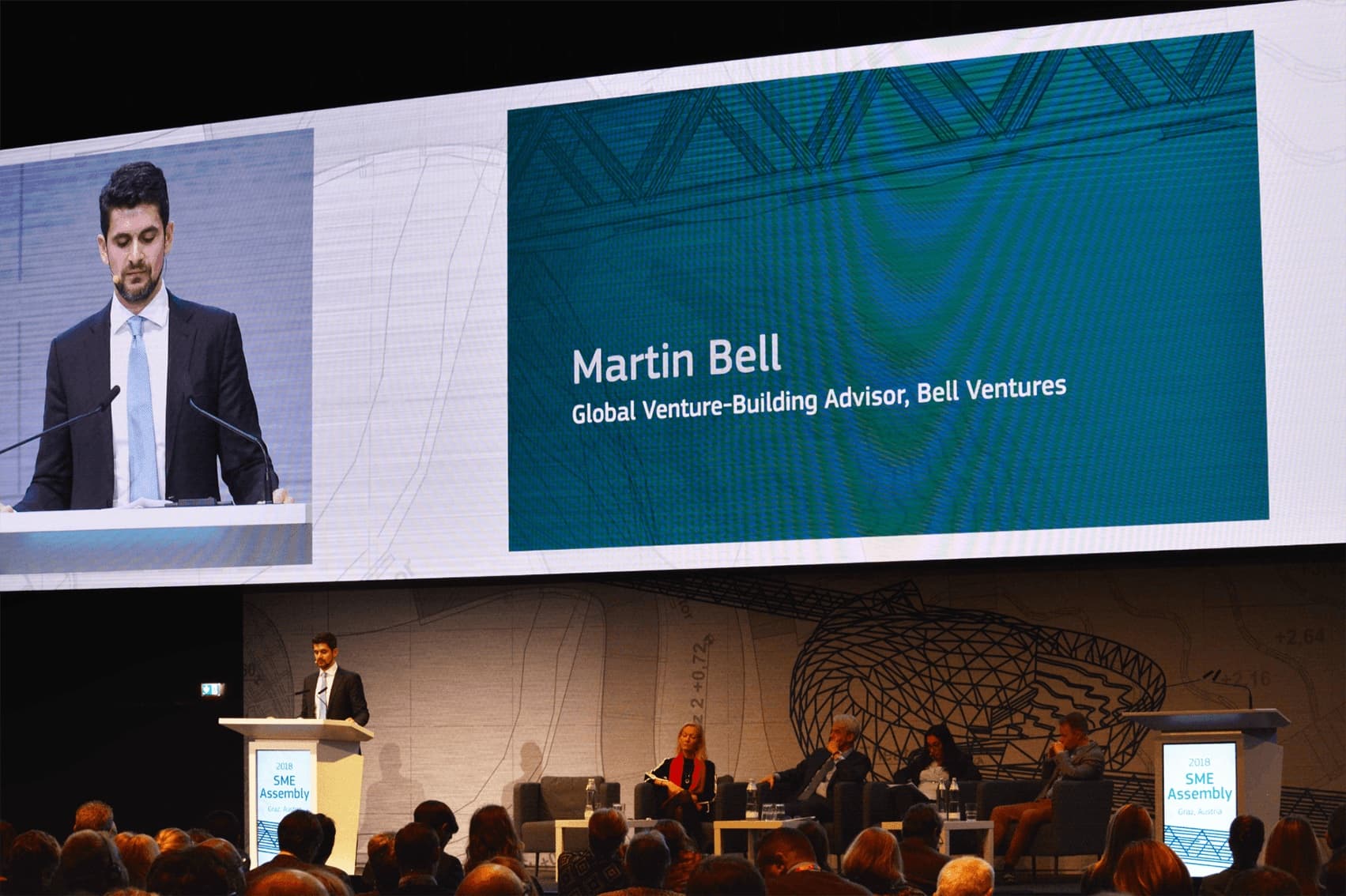
Martin Bell
Founder of 100 Tasks. Martin Bell has launched or supported 120+ startups and turned Rocket Internet venture-building discipline into a step-by-step system used by 25,000+ founders and startups.