Martin Bell11 Min Read
10 Concierge MVP Examples for First-Time Founders (2026)
A 2026 example library for testing demand by personally delivering the result before investing in automation.
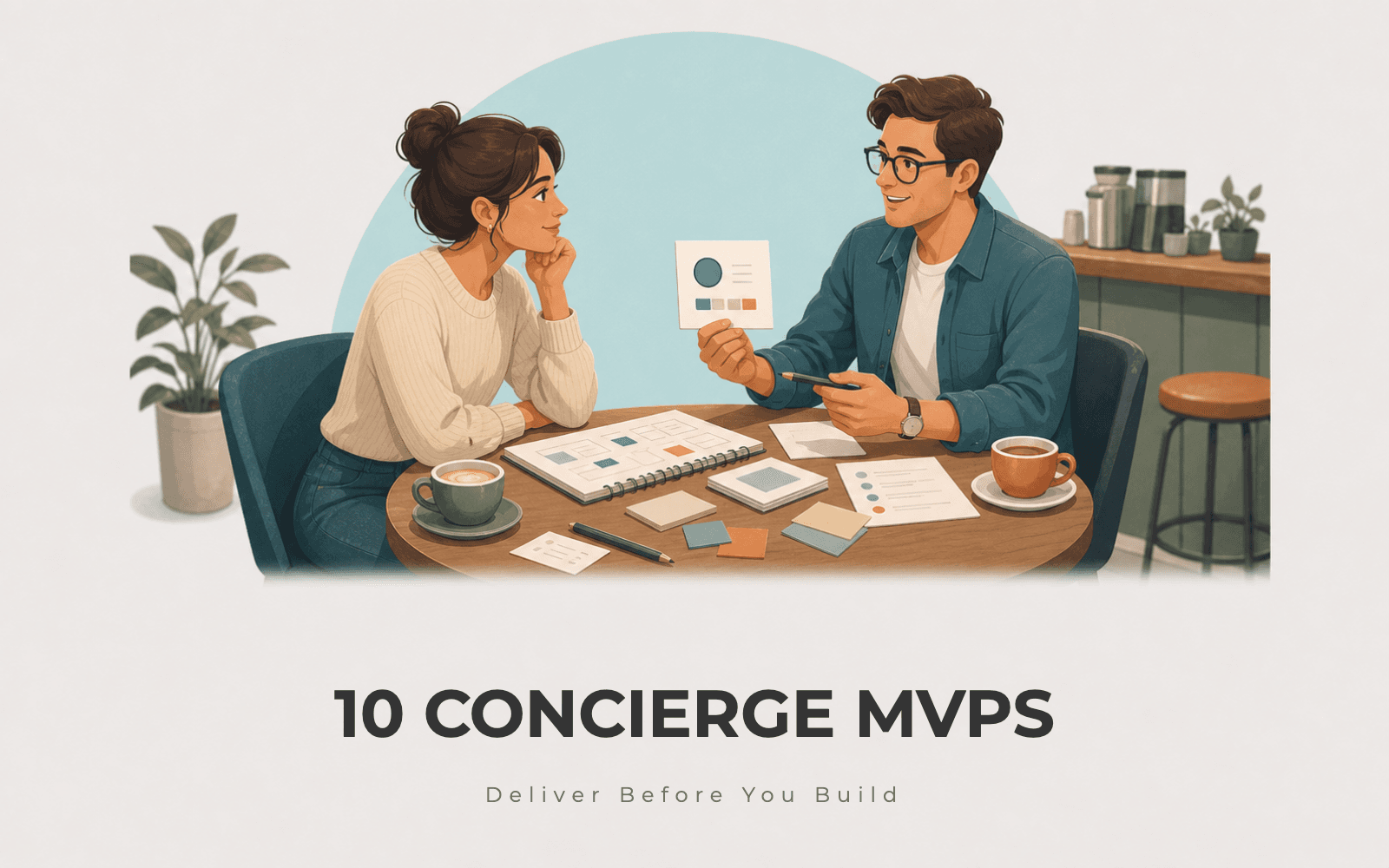
A concierge MVP tests whether customers want the outcome enough to accept a manual, high-touch version. Instead of building software first, the founder personally delivers the result and watches where value, friction, and willingness to pay appear.
This is one of the best MVP formats for first-time founders in 2026 because AI makes it tempting to build too soon. A concierge MVP slows down the right part of the process: it forces you to understand the customer before you automate the work.
The examples below show how to run a useful concierge test without pretending the manual version is the final product. The point is learning, not hiding the process.
Key Takeaways
-
A concierge MVP validates the outcome, workflow, price, and customer trust before software exists.
-
Manual delivery is a feature of the test, not a failure.
-
The founder should track what customers ask, ignore, repeat, and pay for.
-
Do not scale the manual process too far before deciding what should become software.
-
A good concierge MVP ends with clearer build requirements or a decision to stop.
When a Concierge MVP Is the Right Test
Use a concierge MVP when the risk is not whether software can be built, but whether the customer wants the result, trusts the process, and will change behavior to get the benefit.
The founder should define three things before starting: the promised result, the manual steps required to deliver it, and the evidence that would justify building a product. Without those boundaries, the test becomes consulting.
Be honest with early customers. You can say the process is hands-on while you learn. That creates trust and often gives better feedback than pretending everything is automated.
1. Personalized Travel Planning MVP
This idea serves busy travelers who want a tailored itinerary but do not want to compare hundreds of options. The promise is to deliver a trip plan based on budget, constraints, preferences, and timing. That matters because the customer is not buying an abstract tool or a clever business model. They are buying a cleaner version of a painful job they already recognize.
The first version should stay deliberately small: manually interview the traveler, research options, and present a simple itinerary with tradeoffs. Use AI where it helps with research, drafting, sorting, or summarizing, but keep human judgment in the final delivery. Early customers are paying for a useful result, not for unreviewed output.
The validation signal is that the traveler pays, uses the plan, and asks for updates or a second trip. If that signal appears more than once, you can improve the package, write the delivery checklist, and decide whether the offer should become a productized service, template, or software wedge.
Avoid building a recommendation engine before knowing which tradeoffs travelers trust. That mistake makes the business look larger while making the actual learning weaker.
2. Bookkeeping Cleanup MVP
This idea serves small business owners whose receipts, categories, and monthly numbers are a mess. The promise is to turn scattered financial records into a clear monthly snapshot and action list. That matters because the customer is not buying an abstract tool or a clever business model. They are buying a cleaner version of a painful job they already recognize.
The first version should stay deliberately small: collect documents, clean categories manually, and explain three decisions the owner needs to make. Use AI where it helps with research, drafting, sorting, or summarizing, but keep human judgment in the final delivery. Early customers are paying for a useful result, not for unreviewed output.
The validation signal is that the owner pays again next month or asks for a recurring workflow. If that signal appears more than once, you can improve the package, write the delivery checklist, and decide whether the offer should become a productized service, template, or software wedge.
Avoid making legal or tax claims beyond the scope of organization and bookkeeping support. That mistake makes the business look larger while making the actual learning weaker.
3. Appointment Navigator MVP
This idea serves patients, families, or clinics dealing with confusing appointment logistics. The promise is to coordinate reminders, paperwork, follow-up questions, and next steps. That matters because the customer is not buying an abstract tool or a clever business model. They are buying a cleaner version of a painful job they already recognize.
The first version should stay deliberately small: manually manage one appointment workflow with consent and clear privacy boundaries. Use AI where it helps with research, drafting, sorting, or summarizing, but keep human judgment in the final delivery. Early customers are paying for a useful result, not for unreviewed output.
The validation signal is that the customer says the process reduced stress and asks to use it again. If that signal appears more than once, you can improve the package, write the delivery checklist, and decide whether the offer should become a productized service, template, or software wedge.
Avoid handling sensitive data without proper consent, storage discipline, and compliance advice. That mistake makes the business look larger while making the actual learning weaker.
4. Hiring Shortlist MVP
This idea serves small teams that need to screen applicants but lack a recruiting process. The promise is to turn applications into a ranked shortlist with reasons and interview prompts. That matters because the customer is not buying an abstract tool or a clever business model. They are buying a cleaner version of a painful job they already recognize.
The first version should stay deliberately small: manually review candidates against a scorecard and deliver a structured shortlist. Use AI where it helps with research, drafting, sorting, or summarizing, but keep human judgment in the final delivery. Early customers are paying for a useful result, not for unreviewed output.
The validation signal is that the hiring manager uses the shortlist and wants the same process for the next role. If that signal appears more than once, you can improve the package, write the delivery checklist, and decide whether the offer should become a productized service, template, or software wedge.
Avoid opaque ranking that cannot be explained or audited. That mistake makes the business look larger while making the actual learning weaker.
5. Meal Planning MVP
This idea serves busy households with dietary constraints, budget limits, or repetitive shopping decisions. The promise is to create a practical weekly plan with recipes, shopping list, and prep schedule. That matters because the customer is not buying an abstract tool or a clever business model. They are buying a cleaner version of a painful job they already recognize.
The first version should stay deliberately small: interview five households, manually build plans, and track what they actually cook. Use AI where it helps with research, drafting, sorting, or summarizing, but keep human judgment in the final delivery. Early customers are paying for a useful result, not for unreviewed output.
The validation signal is that customers use the plan for more than one week and pay for another cycle. If that signal appears more than once, you can improve the package, write the delivery checklist, and decide whether the offer should become a productized service, template, or software wedge.
Avoid beautiful plans that fail in the kitchen because prep time was unrealistic. That mistake makes the business look larger while making the actual learning weaker.
6. Property Maintenance Coordinator MVP
This idea serves landlords or property managers juggling recurring maintenance requests. The promise is to triage requests, coordinate vendors, and give owners a clean status view. That matters because the customer is not buying an abstract tool or a clever business model. They are buying a cleaner version of a painful job they already recognize.
The first version should stay deliberately small: manually manage a small set of requests with a shared tracker and update cadence. Use AI where it helps with research, drafting, sorting, or summarizing, but keep human judgment in the final delivery. Early customers are paying for a useful result, not for unreviewed output.
The validation signal is that owners save time, tenants get faster updates, and vendor coordination repeats. If that signal appears more than once, you can improve the package, write the delivery checklist, and decide whether the offer should become a productized service, template, or software wedge.
Avoid becoming an emergency service before the workflow and liability boundaries are clear. That mistake makes the business look larger while making the actual learning weaker.
7. B2B Vendor Matching MVP
This idea serves business buyers who need a shortlist of vendors but do not know who fits. The promise is to recommend a few credible vendors based on requirements, budget, and constraints. That matters because the customer is not buying an abstract tool or a clever business model. They are buying a cleaner version of a painful job they already recognize.
The first version should stay deliberately small: interview the buyer, research vendors manually, and present a comparison memo. Use AI where it helps with research, drafting, sorting, or summarizing, but keep human judgment in the final delivery. Early customers are paying for a useful result, not for unreviewed output.
The validation signal is that the buyer takes calls with your shortlist and trusts your tradeoff analysis. If that signal appears more than once, you can improve the package, write the delivery checklist, and decide whether the offer should become a productized service, template, or software wedge.
Avoid affiliate-first recommendations that damage trust. That mistake makes the business look larger while making the actual learning weaker.
8. Training Plan MVP
This idea serves new managers, sales reps, or operators who need a practical learning path. The promise is to turn role expectations into a weekly training plan with assignments and check-ins. That matters because the customer is not buying an abstract tool or a clever business model. They are buying a cleaner version of a painful job they already recognize.
The first version should stay deliberately small: manually design the plan for one role and review progress weekly. Use AI where it helps with research, drafting, sorting, or summarizing, but keep human judgment in the final delivery. Early customers are paying for a useful result, not for unreviewed output.
The validation signal is that the manager sees faster ramp-up and asks to repeat it for the next hire. If that signal appears more than once, you can improve the package, write the delivery checklist, and decide whether the offer should become a productized service, template, or software wedge.
Avoid generic courses that ignore the company context. That mistake makes the business look larger while making the actual learning weaker.
9. Legal Intake Triage MVP
This idea serves founders who need to organize legal questions before speaking with a professional. The promise is to sort facts, documents, questions, and decision points into a clean intake packet. That matters because the customer is not buying an abstract tool or a clever business model. They are buying a cleaner version of a painful job they already recognize.
The first version should stay deliberately small: manually collect information and prepare a non-legal summary for a lawyer or advisor. Use AI where it helps with research, drafting, sorting, or summarizing, but keep human judgment in the final delivery. Early customers are paying for a useful result, not for unreviewed output.
The validation signal is that the founder says the paid professional conversation became faster and clearer. If that signal appears more than once, you can improve the package, write the delivery checklist, and decide whether the offer should become a productized service, template, or software wedge.
Avoid giving legal advice or implying the MVP replaces a qualified professional. That mistake makes the business look larger while making the actual learning weaker.
10. Sales Follow-Up Assistant MVP
This idea serves founders who lose leads because follow-up is inconsistent. The promise is to track open conversations, draft follow-ups, and prompt the next action. That matters because the customer is not buying an abstract tool or a clever business model. They are buying a cleaner version of a painful job they already recognize.
The first version should stay deliberately small: manually review the pipeline each day and send recommended follow-up copy. Use AI where it helps with research, drafting, sorting, or summarizing, but keep human judgment in the final delivery. Early customers are paying for a useful result, not for unreviewed output.
The validation signal is that the founder sends the messages, gets replies, and wants the cadence to continue. If that signal appears more than once, you can improve the package, write the delivery checklist, and decide whether the offer should become a productized service, template, or software wedge.
Avoid automating spam instead of improving timing and relevance. That mistake makes the business look larger while making the actual learning weaker.
What to Measure Before You Build
Measure what customers do, not just what they say. Did they pay? Did they share information? Did they wait for the result? Did they use it? Did they ask for more?
Also measure the work. Which steps repeated? Which steps needed founder judgment? Which steps were messy because the idea is unclear? Those observations become the product spec if the concierge MVP earns the right to become software.
A first-time founder does not need to skip straight to code. The better move is to deliver the outcome, learn the workflow, and build only after the evidence says the product deserves it.

Martin Bell
Startup-building guidance from the 100 Tasks framework.