Martin Bell11 Min Read
10 Productized Service Examples for Solo Founders (2026)
A 2026 library of repeatable solo service offers with clear scope, delivery assets, and validation signals.
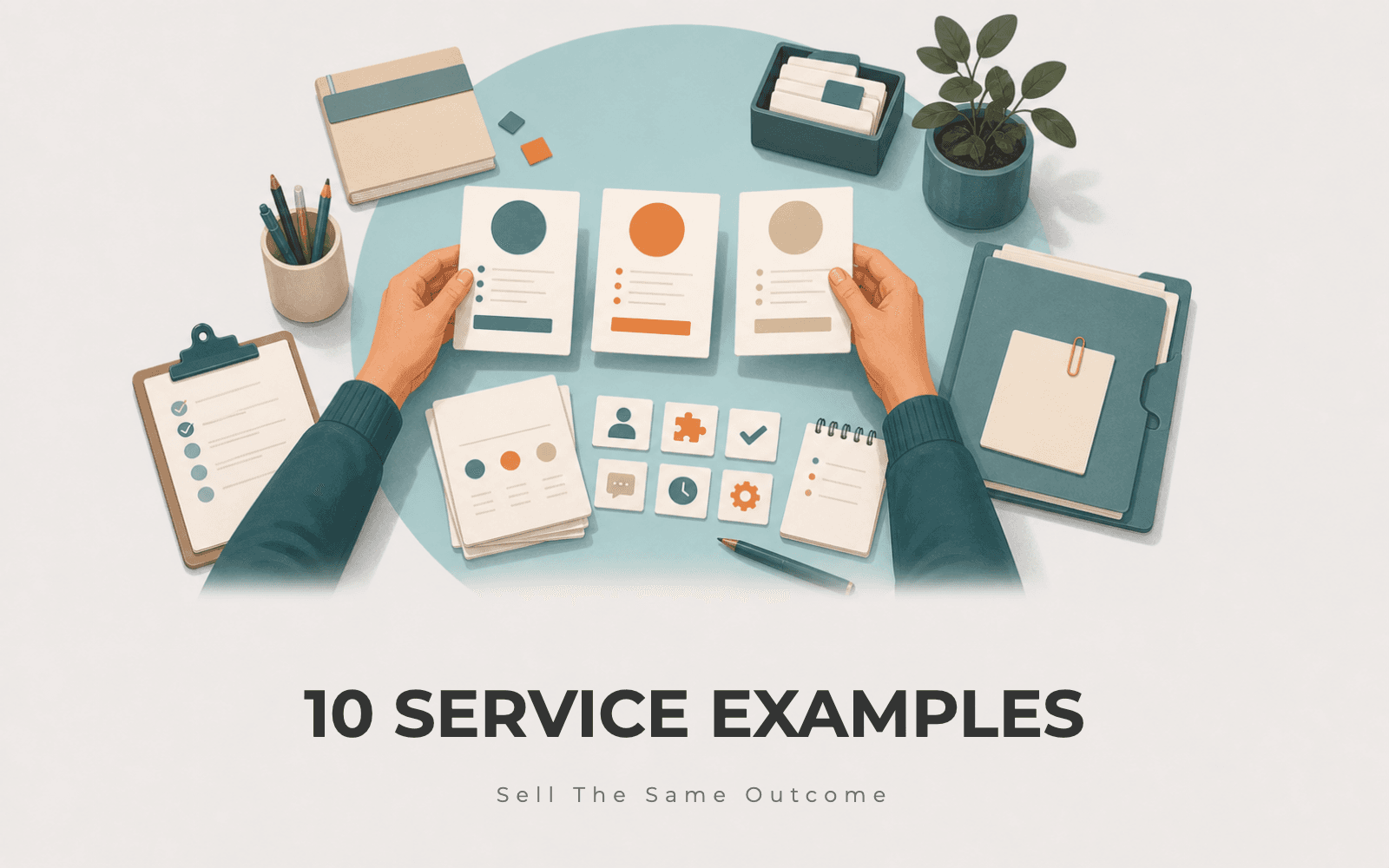
A productized service is not just a service with a price tag. It is a repeatable promise, sold to a specific customer, delivered through a known process, and improved every time the same problem appears.
That is why productized services are so useful for solo founders in 2026. AI can help with research, drafts, summaries, analysis, and admin, but the business still works only when the customer understands exactly what outcome they are buying.
The examples below are designed to be small enough for one person to run and specific enough to validate quickly. Each one can begin as a manual offer before it becomes a template library, software workflow, or larger operating system.
Key Takeaways
-
A productized service needs one customer, one painful job, one outcome, and one delivery path.
-
The best first version is manually delivered, tightly scoped, and easy to explain in one sentence.
-
Repeatability matters more than automation at the start.
-
Raise quality by improving the intake, checklist, examples, and handoff after every delivery.
-
Avoid custom work that changes the promise for every buyer.
What Makes a Service Productized
Use four boundaries. The customer boundary says who the offer is for. The outcome boundary says what changes after the work is complete. The scope boundary says what is included and what is not. The delivery boundary says how the result is produced each time.
A solo founder should be able to describe the offer without a discovery call. A call can help confirm fit, but the buyer should understand the promise from the page, proposal, or message.
The first validation signal is not a polished brand. It is someone paying for the same package twice, or a second customer buying the same package without you rewriting the offer from scratch.
1. Customer Interview Sprint
This idea serves founders who need real customer language before writing positioning or product copy. The promise is to run a fixed number of interviews and turn the patterns into usable messaging and decision notes. That matters because the customer is not buying an abstract tool or a clever business model. They are buying a cleaner version of a painful job they already recognize.
The first version should stay deliberately small: sell a five-interview sprint with a one-page insight report and a short recommendation call. Use AI where it helps with research, drafting, sorting, or summarizing, but keep human judgment in the final delivery. Early customers are paying for a useful result, not for unreviewed output.
The validation signal is that the founder changes their page, offer, or roadmap based on the report. If that signal appears more than once, you can improve the package, write the delivery checklist, and decide whether the offer should become a productized service, template, or software wedge.
Avoid open-ended research retainers before the sprint format is proven. That mistake makes the business look larger while making the actual learning weaker.
2. Landing Page Rewrite Package
This idea serves early-stage founders with traffic or outreach but weak conversion. The promise is to clarify the hero, problem, proof, offer, and call to action on one page. That matters because the customer is not buying an abstract tool or a clever business model. They are buying a cleaner version of a painful job they already recognize.
The first version should stay deliberately small: audit the current page, rewrite the core sections, and deliver annotated rationale. Use AI where it helps with research, drafting, sorting, or summarizing, but keep human judgment in the final delivery. Early customers are paying for a useful result, not for unreviewed output.
The validation signal is that the customer publishes the changes and comes back with conversion or reply data. If that signal appears more than once, you can improve the package, write the delivery checklist, and decide whether the offer should become a productized service, template, or software wedge.
Avoid selling visual redesign when the real issue is unclear positioning. That mistake makes the business look larger while making the actual learning weaker.
3. Founder Content Repurposing System
This idea serves founders with calls, notes, and strong opinions but no consistent publishing system. The promise is to turn one source insight into posts, emails, clips, and sales notes. That matters because the customer is not buying an abstract tool or a clever business model. They are buying a cleaner version of a painful job they already recognize.
The first version should stay deliberately small: process one customer call or founder memo into a 30-asset batch. Use AI where it helps with research, drafting, sorting, or summarizing, but keep human judgment in the final delivery. Early customers are paying for a useful result, not for unreviewed output.
The validation signal is that the founder uses the assets and buys the next batch from the same workflow. If that signal appears more than once, you can improve the package, write the delivery checklist, and decide whether the offer should become a productized service, template, or software wedge.
Avoid volume without judgment, especially generic captions that do not reflect the founder. That mistake makes the business look larger while making the actual learning weaker.
4. Lead List With Outreach Angles
This idea serves B2B sellers who know the market but need better account research. The promise is to deliver qualified prospects with a reason to reach out and a suggested first message angle. That matters because the customer is not buying an abstract tool or a clever business model. They are buying a cleaner version of a painful job they already recognize.
The first version should stay deliberately small: produce a small paid sample for one exact ICP. Use AI where it helps with research, drafting, sorting, or summarizing, but keep human judgment in the final delivery. Early customers are paying for a useful result, not for unreviewed output.
The validation signal is that the customer sends outreach from the list and asks for another batch. If that signal appears more than once, you can improve the package, write the delivery checklist, and decide whether the offer should become a productized service, template, or software wedge.
Avoid selling raw data exports that create more work for the buyer. That mistake makes the business look larger while making the actual learning weaker.
5. Software Onboarding Setup
This idea serves new users of a specific tool who need setup help before they see value. The promise is to configure the tool for one workflow and leave the buyer with a clean handoff doc. That matters because the customer is not buying an abstract tool or a clever business model. They are buying a cleaner version of a painful job they already recognize.
The first version should stay deliberately small: offer a 90-minute setup session plus checklist for one tool and customer type. Use AI where it helps with research, drafting, sorting, or summarizing, but keep human judgment in the final delivery. Early customers are paying for a useful result, not for unreviewed output.
The validation signal is that customers pay to skip setup and refer peers with the same tool problem. If that signal appears more than once, you can improve the package, write the delivery checklist, and decide whether the offer should become a productized service, template, or software wedge.
Avoid unlimited support after the setup is complete. That mistake makes the business look larger while making the actual learning weaker.
6. Dashboard Cleanup Package
This idea serves operators with messy spreadsheets or dashboards nobody trusts. The promise is to simplify the reporting view so one decision becomes easier every week. That matters because the customer is not buying an abstract tool or a clever business model. They are buying a cleaner version of a painful job they already recognize.
The first version should stay deliberately small: clean one dashboard, remove vanity metrics, and write a short weekly review guide. Use AI where it helps with research, drafting, sorting, or summarizing, but keep human judgment in the final delivery. Early customers are paying for a useful result, not for unreviewed output.
The validation signal is that the customer uses the dashboard in a recurring meeting. If that signal appears more than once, you can improve the package, write the delivery checklist, and decide whether the offer should become a productized service, template, or software wedge.
Avoid adding more charts instead of clarifying the decision. That mistake makes the business look larger while making the actual learning weaker.
7. Proposal Clinic
This idea serves consultants and agencies losing deals because their proposals are vague or overbuilt. The promise is to turn a messy proposal into a clear scope, price, proof, and next step. That matters because the customer is not buying an abstract tool or a clever business model. They are buying a cleaner version of a painful job they already recognize.
The first version should stay deliberately small: review one recent proposal and rewrite the decision-critical sections. Use AI where it helps with research, drafting, sorting, or summarizing, but keep human judgment in the final delivery. Early customers are paying for a useful result, not for unreviewed output.
The validation signal is that the buyer reuses the format and asks for a template or second proposal review. If that signal appears more than once, you can improve the package, write the delivery checklist, and decide whether the offer should become a productized service, template, or software wedge.
Avoid rewriting language without improving the offer structure. That mistake makes the business look larger while making the actual learning weaker.
8. Customer Proof Pack
This idea serves founders with happy users but no usable proof assets. The promise is to collect quotes, mini case studies, objection answers, and proof snippets. That matters because the customer is not buying an abstract tool or a clever business model. They are buying a cleaner version of a painful job they already recognize.
The first version should stay deliberately small: interview three customers and package the findings for sales pages and outreach. Use AI where it helps with research, drafting, sorting, or summarizing, but keep human judgment in the final delivery. Early customers are paying for a useful result, not for unreviewed output.
The validation signal is that the founder uses the proof in live sales conversations. If that signal appears more than once, you can improve the package, write the delivery checklist, and decide whether the offer should become a productized service, template, or software wedge.
Avoid manufacturing hype instead of capturing what customers actually experienced. That mistake makes the business look larger while making the actual learning weaker.
9. Email Nurture Sprint
This idea serves businesses with signups or leads but weak follow-up. The promise is to write a short sequence that educates, answers objections, and asks for the next action. That matters because the customer is not buying an abstract tool or a clever business model. They are buying a cleaner version of a painful job they already recognize.
The first version should stay deliberately small: build a five-email sequence from customer questions and sales notes. Use AI where it helps with research, drafting, sorting, or summarizing, but keep human judgment in the final delivery. Early customers are paying for a useful result, not for unreviewed output.
The validation signal is that the sequence starts conversations or rescues leads that would otherwise go cold. If that signal appears more than once, you can improve the package, write the delivery checklist, and decide whether the offer should become a productized service, template, or software wedge.
Avoid generic newsletter copy that does not move the buyer closer to a decision. That mistake makes the business look larger while making the actual learning weaker.
10. Operations Audit for One Workflow
This idea serves small companies losing time in intake, onboarding, reporting, or fulfillment. The promise is to map the workflow, find the breaks, and deliver a cleaner checklist. That matters because the customer is not buying an abstract tool or a clever business model. They are buying a cleaner version of a painful job they already recognize.
The first version should stay deliberately small: run a fixed audit for one workflow with a before-and-after map. Use AI where it helps with research, drafting, sorting, or summarizing, but keep human judgment in the final delivery. Early customers are paying for a useful result, not for unreviewed output.
The validation signal is that the customer implements the checklist and asks you to repeat the process elsewhere. If that signal appears more than once, you can improve the package, write the delivery checklist, and decide whether the offer should become a productized service, template, or software wedge.
Avoid becoming a general assistant instead of an operator improving one workflow. That mistake makes the business look larger while making the actual learning weaker.
How to Turn One Service Into a System
Pick the example closest to a problem you can observe. Sell it manually first, write down every step you repeat, and improve the intake and handoff after each delivery.
The path from solo service to scalable business is not instant automation. It is repetition, evidence, and better scope. Once the same problem appears across customers, you can turn the checklist into templates, training, software, or a larger operating system.
That is the practical 100 Tasks approach: package one outcome, deliver it, learn from the customer, and keep the process intact as the business grows.

Martin Bell
Startup-building guidance from the 100 Tasks framework.