Martin Bell12 Min Read
10 Online Business Ideas You Can Start With No Experience (2026)
A practical 2026 guide to beginner-friendly online offers, manual first versions, and the customer signals that matter.
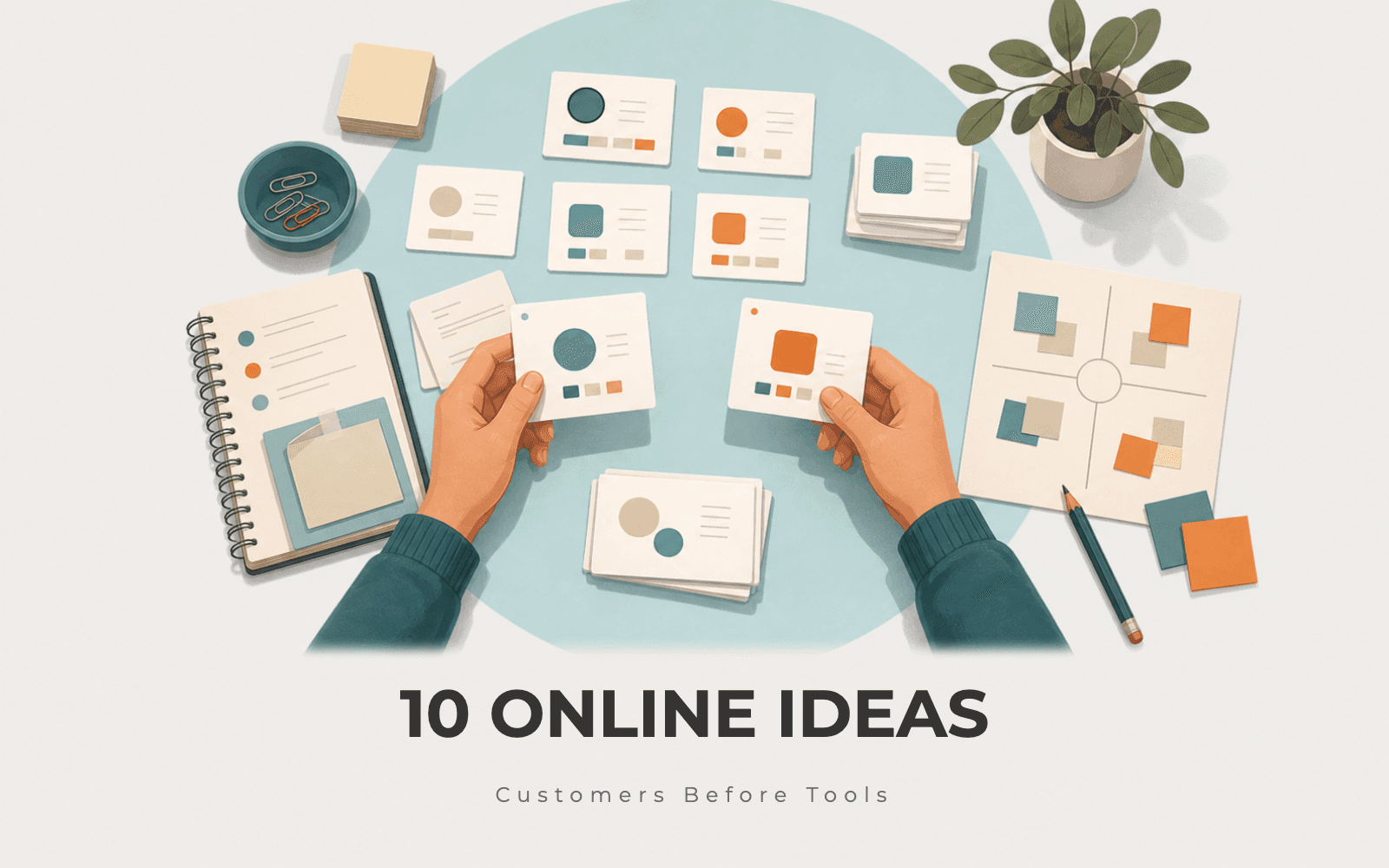
The easiest online business to start is rarely the flashiest. A first-time founder usually wins by choosing a narrow customer, a painful workflow, and a simple promise that can be delivered manually before it becomes a product.
That matters even more in 2026. AI can help you research, draft, package, and follow up faster, but it cannot tell you which customer will actually pay. The only reliable answer comes from a small offer, a real conversation, and a visible buying signal.
Use this list as a starting menu, not a fantasy board. Each idea includes the first version to sell, the validation signal to look for, and the mistake that usually turns a good beginner idea into busywork.
Key Takeaways
-
Choose a reachable customer before choosing a tool or platform.
-
Start with a paid service, template, newsletter, or manual workflow when software would slow learning down.
-
A strong online idea has a clear before-and-after outcome.
-
The first signal is a reply, call, deposit, repeat purchase, or referral, not a compliment.
-
AI should shorten the work loop, not replace customer discovery.
How to Pick an Online Business Idea When You Are New
Start by asking where you can observe the problem directly. If the customer lives in public communities, marketplaces, directories, newsletters, review sites, or your existing work history, you can learn without waiting for permission.
Then choose a first offer that takes less than two weeks to deliver manually. The goal is not to look like a mature company. The goal is to create one useful outcome for one specific customer and learn what they value enough to pay for.
Finally, write down the customer signal before you start. For example: five booked calls, two paid pilots, ten qualified replies, one repeat purchase, or a buyer who sends your offer to someone else. Without a signal, you are only producing assets.
1. Niche Customer Research Sprint
This idea serves small businesses that know too little about why customers buy, churn, or hesitate. The promise is to turn five customer interviews into a short decision memo the owner can act on. That matters because the customer is not buying an abstract tool or a clever business model. They are buying a cleaner version of a painful job they already recognize.
The first version should stay deliberately small: sell a fixed research sprint for one niche, conduct interviews, summarize patterns, and recommend three tests. Use AI where it helps with research, drafting, sorting, or summarizing, but keep human judgment in the final delivery. Early customers are paying for a useful result, not for unreviewed output.
The validation signal is that the owner pays for the summary and asks for help running one of the tests. If that signal appears more than once, you can improve the package, write the delivery checklist, and decide whether the offer should become a productized service, template, or software wedge.
Avoid vague research that produces interesting quotes but no decisions. That mistake makes the business look larger while making the actual learning weaker.
2. AI-Assisted Content Batch for Local Experts
This idea serves dentists, tutors, coaches, repair shops, and local consultants with expertise but no publishing rhythm. The promise is to turn one owner interview into a month of posts, email ideas, and short scripts. That matters because the customer is not buying an abstract tool or a clever business model. They are buying a cleaner version of a painful job they already recognize.
The first version should stay deliberately small: record a 45-minute interview, extract objections and stories, then deliver a first content batch for approval. Use AI where it helps with research, drafting, sorting, or summarizing, but keep human judgment in the final delivery. Early customers are paying for a useful result, not for unreviewed output.
The validation signal is that the customer buys the next batch because the first one saved time and sounded like them. If that signal appears more than once, you can improve the package, write the delivery checklist, and decide whether the offer should become a productized service, template, or software wedge.
Avoid generic AI posts that could belong to any business in the category. That mistake makes the business look larger while making the actual learning weaker.
3. Online Onboarding Concierge
This idea serves people who bought a complicated tool but have not reached a useful first result. The promise is to set up the tool, configure the first workflow, and hand over a simple operating doc. That matters because the customer is not buying an abstract tool or a clever business model. They are buying a cleaner version of a painful job they already recognize.
The first version should stay deliberately small: pick one software category, publish a setup checklist, and offer three fixed-price setup calls. Use AI where it helps with research, drafting, sorting, or summarizing, but keep human judgment in the final delivery. Early customers are paying for a useful result, not for unreviewed output.
The validation signal is that customers pay to skip the learning curve and vendors or consultants start referring users. If that signal appears more than once, you can improve the package, write the delivery checklist, and decide whether the offer should become a productized service, template, or software wedge.
Avoid becoming unlimited support instead of a repeatable setup package. That mistake makes the business look larger while making the actual learning weaker.
4. Template Library for One Workflow
This idea serves one role that repeats a painful document, sales, onboarding, or planning workflow. The promise is to provide practical templates with examples and instructions, not blank pretty files. That matters because the customer is not buying an abstract tool or a clever business model. They are buying a cleaner version of a painful job they already recognize.
The first version should stay deliberately small: sell one bundle with three to five assets and a short walkthrough video. Use AI where it helps with research, drafting, sorting, or summarizing, but keep human judgment in the final delivery. Early customers are paying for a useful result, not for unreviewed output.
The validation signal is that buyers use the assets in a real workflow and ask for the next bundle. If that signal appears more than once, you can improve the package, write the delivery checklist, and decide whether the offer should become a productized service, template, or software wedge.
Avoid making a broad marketplace before proving one workflow matters. That mistake makes the business look larger while making the actual learning weaker.
5. B2B Lead Research Service
This idea serves small B2B sellers who need better target accounts but do not have research capacity. The promise is to deliver a short list of qualified accounts with the reason each account fits. That matters because the customer is not buying an abstract tool or a clever business model. They are buying a cleaner version of a painful job they already recognize.
The first version should stay deliberately small: build a paid sample list for one buyer profile and include a suggested outreach angle. Use AI where it helps with research, drafting, sorting, or summarizing, but keep human judgment in the final delivery. Early customers are paying for a useful result, not for unreviewed output.
The validation signal is that the seller uses the list, shares reply data, and buys another batch. If that signal appears more than once, you can improve the package, write the delivery checklist, and decide whether the offer should become a productized service, template, or software wedge.
Avoid cheap scraped lists with no judgment or timing insight. That mistake makes the business look larger while making the actual learning weaker.
6. Vendor Comparison Newsletter
This idea serves buyers choosing tools in a narrow category with too many similar options. The promise is to explain which option fits which situation in plain language. That matters because the customer is not buying an abstract tool or a clever business model. They are buying a cleaner version of a painful job they already recognize.
The first version should stay deliberately small: publish one comparison guide, interview users, and invite readers to reply with buying questions. Use AI where it helps with research, drafting, sorting, or summarizing, but keep human judgment in the final delivery. Early customers are paying for a useful result, not for unreviewed output.
The validation signal is that readers ask for recommendations, share the guide, or pay for a deeper decision call. If that signal appears more than once, you can improve the package, write the delivery checklist, and decide whether the offer should become a productized service, template, or software wedge.
Avoid generic best-tool roundups with no specific buyer context. That mistake makes the business look larger while making the actual learning weaker.
7. Workflow Cleanup for Remote Teams
This idea serves small teams with messy handoffs, scattered docs, and repeated status questions. The promise is to map the workflow, remove duplicate steps, and create a lightweight operating checklist. That matters because the customer is not buying an abstract tool or a clever business model. They are buying a cleaner version of a painful job they already recognize.
The first version should stay deliberately small: offer a one-week cleanup for one repeated workflow such as onboarding, client intake, or reporting. Use AI where it helps with research, drafting, sorting, or summarizing, but keep human judgment in the final delivery. Early customers are paying for a useful result, not for unreviewed output.
The validation signal is that the team uses the checklist without you chasing them and asks you to clean another workflow. If that signal appears more than once, you can improve the package, write the delivery checklist, and decide whether the offer should become a productized service, template, or software wedge.
Avoid selling generic productivity advice instead of one measurable process improvement. That mistake makes the business look larger while making the actual learning weaker.
8. Micro Education Product
This idea serves professionals who need one narrow skill or decision explained quickly. The promise is to teach one job-to-be-done with a guide, examples, checklist, and live teardown. That matters because the customer is not buying an abstract tool or a clever business model. They are buying a cleaner version of a painful job they already recognize.
The first version should stay deliberately small: pre-sell a small workshop or paid guide before building a course library. Use AI where it helps with research, drafting, sorting, or summarizing, but keep human judgment in the final delivery. Early customers are paying for a useful result, not for unreviewed output.
The validation signal is that strangers pay before the full product exists and ask follow-up questions about implementation. If that signal appears more than once, you can improve the package, write the delivery checklist, and decide whether the offer should become a productized service, template, or software wedge.
Avoid building a large course around what you want to teach instead of what buyers need now. That mistake makes the business look larger while making the actual learning weaker.
9. Customer Objection Library
This idea serves solo founders and small sales teams that answer the same objections inconsistently. The promise is to turn real objections into better responses, proof assets, and follow-up copy. That matters because the customer is not buying an abstract tool or a clever business model. They are buying a cleaner version of a painful job they already recognize.
The first version should stay deliberately small: review calls, emails, or notes from one niche and deliver the first objection library. Use AI where it helps with research, drafting, sorting, or summarizing, but keep human judgment in the final delivery. Early customers are paying for a useful result, not for unreviewed output.
The validation signal is that the customer uses it in proposals, sales pages, and follow-ups. If that signal appears more than once, you can improve the package, write the delivery checklist, and decide whether the offer should become a productized service, template, or software wedge.
Avoid pressure tactics that ignore whether the buyer has a legitimate concern. That mistake makes the business look larger while making the actual learning weaker.
10. Offline-to-Online Offer Package
This idea serves local experts with real trust but weak online packaging. The promise is to turn the existing service into a clear landing page, intake form, booking path, and follow-up email. That matters because the customer is not buying an abstract tool or a clever business model. They are buying a cleaner version of a painful job they already recognize.
The first version should stay deliberately small: deliver one done-with-you package for a narrow expert type such as tutors, accountants, or coaches. Use AI where it helps with research, drafting, sorting, or summarizing, but keep human judgment in the final delivery. Early customers are paying for a useful result, not for unreviewed output.
The validation signal is that the customer gets clearer inquiries or refers another expert with the same problem. If that signal appears more than once, you can improve the package, write the delivery checklist, and decide whether the offer should become a productized service, template, or software wedge.
Avoid positioning it as cheap web design instead of offer packaging. That mistake makes the business look larger while making the actual learning weaker.
Turn the Best Idea Into a Five-Day Validation Sprint
Do not rank these ideas by how impressive they sound. Rank them by how quickly you can reach customers, explain the outcome, and deliver a first version without building infrastructure.
The first work plan is simple: define the customer on day one, speak to five people on day two, write a small offer on day three, pitch ten prospects on day four, and deliver or revise on day five. That is the difference between an online business idea and another folder of notes.
100 Tasks AI is built around that operating discipline: find the next task, do it with context, measure the signal, and keep moving. A beginner does not need to know everything. A beginner needs a process that keeps learning connected to action.

Martin Bell
Startup-building guidance from the 100 Tasks framework.