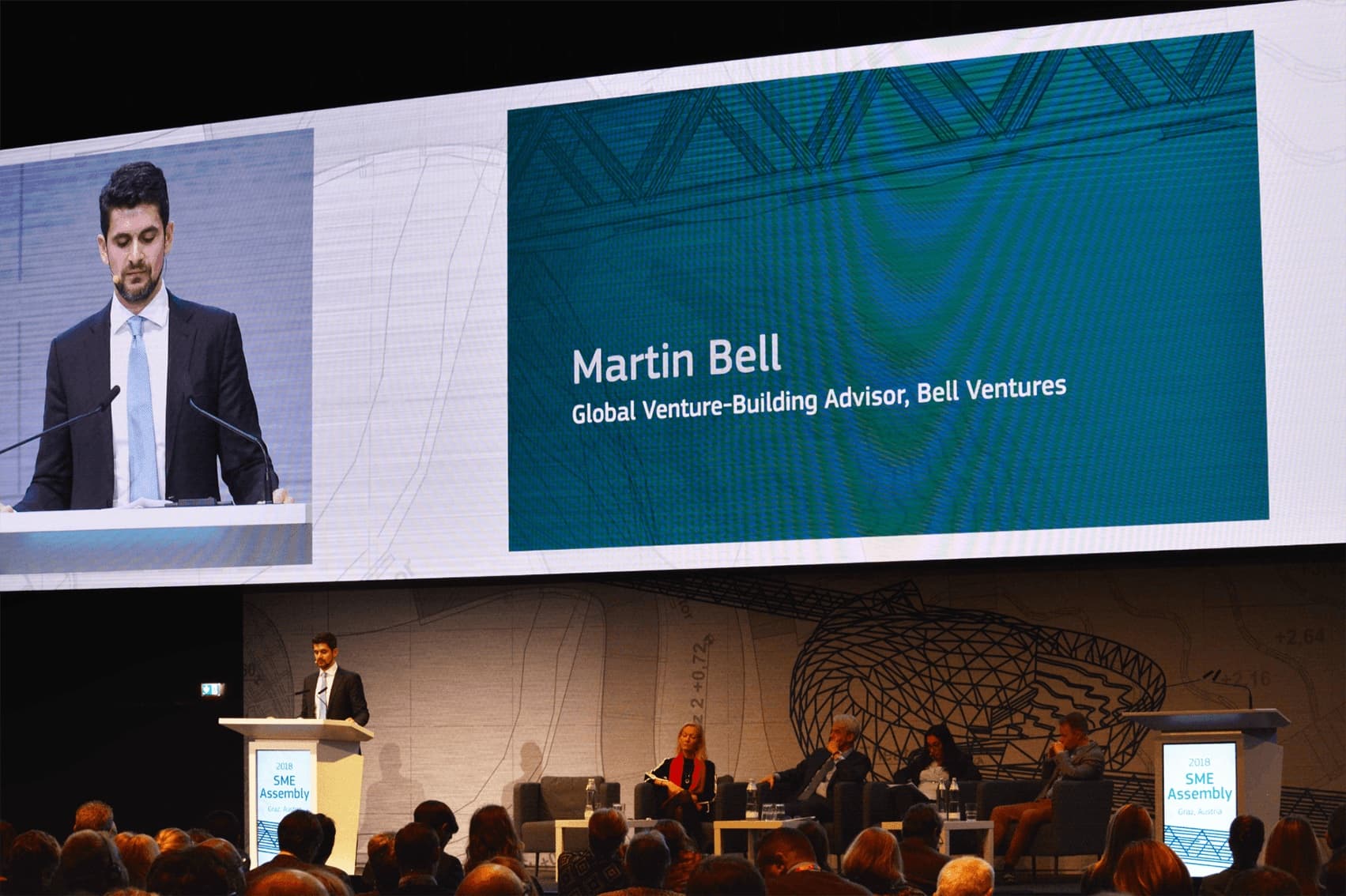
Martin Bell10 Min ReadPublished Jul 13, 2026
Founder-Led Sales: A Practical Playbook (2026)
A 2026 call-by-call operating system for founders who need early revenue, sharper positioning, and a sales motion another person can inherit.

Founder-led sales means the founder owns the early path from target account to signed customer. It is not a permanent refusal to hire salespeople. It is a temporary learning advantage.
Early buyers ask questions that expose weak positioning, missing product requirements, unclear pricing, and hidden implementation work. When the founder hears those questions directly, the company can change in hours. When the same learning passes through a newly hired salesperson, a manager, and a product backlog, it gets slower and less precise.
The goal is therefore bigger than closing a few deals. You are trying to discover a sales motion: a repeatable combination of buyer, trigger, problem, promise, proof, process, and price. This playbook shows how to run that work without treating every call as improvisation.
Start With a Sales Hypothesis, Not a Script
A script cannot rescue an undefined market. Write a one-page sales hypothesis before building an account list:
- Buyer: the person who feels or owns the problem.
- Situation: the event or condition that makes the problem urgent now.
- Cost: time, money, risk, delay, or missed opportunity caused by the current approach.
- Alternative: what the buyer already does instead.
- Promise: the outcome you can credibly create.
- Proof: evidence that reduces the buyer's risk.
- Commitment: the next step you want after the first conversation.
Here is a specific version:
Operations leads at recruitment agencies that have added more than five clients in a quarter are manually assembling weekly client reports. We help them produce a consistent report in under an hour. The first step is a 25-minute workflow review using one recent report.
That hypothesis tells you who to contact, what to notice, and what to ask. “We sell AI reporting software to businesses” does not.
Treat it as version 1, not truth. Your calls will correct it. If the problem is still mostly assumed, run behavior-focused customer validation before pushing for a full commercial close.
Build a Small, Inspectable Account List
Start with 30-50 accounts that fit the same hypothesis. A smaller researched list gives you a useful comparison set. A thousand mixed leads produce a thousand possible explanations for silence.
For each account, capture:
- Why it fits the segment.
- The visible trigger or reason the timing might matter.
- The likely problem owner.
- One relevant fact you can verify.
- The best first channel.
Prioritize with three questions: Is the pain likely? Is the buyer reachable? Can your current product or manual service create value? A famous company with a long procurement cycle may be less useful than a smaller buyer who can start next week.
Reach out in batches of ten or fifteen. Keep the offer and segment stable inside each batch. If you need help turning research into a concise message, adapt the situation-specific startup cold email examples rather than sending one generic template to the whole list.
Use Five Pipeline Stages With Exit Criteria
Founders often call every friendly conversation a lead. That creates a full-looking pipeline with no decisions inside it. Use stages that describe buyer behavior:
| Stage | Entry evidence | Exit evidence |
|---|---|---|
| Target | Account matches the written hypothesis | Correct contact and trigger verified |
| Discovery | Buyer agrees to examine the problem | Consequence, urgency, and decision path understood |
| Evaluation | Buyer wants to assess your approach | Success criteria, stakeholders, and scope agreed |
| Commitment | Commercial terms are being decided | Signed agreement, payment, or explicit no |
| Live | Customer has started | First value reached and next review scheduled |
No “maybe interested” stage. Either a next action has an owner and date, or the opportunity is parked with a reason. This prevents follow-up from becoming hopeful inbox checking.
Record how opportunities leave each stage. “No budget until October,” “existing contract renews in sixty days,” and “problem belongs to finance, not operations” are useful. “Went cold” describes your experience, not the buyer's situation.
Prepare a One-Page Call Brief
Preparation should improve your questions, not produce a long company biography. Ten minutes is often enough for an early call.
Use this brief:
Account context: What does the company do, and why did it enter the list?
Trigger: What recent event makes the hypothesis plausible?
Unknowns: Which three facts must the call establish?
Relevant proof: Which one customer story, result, prototype, or insight fits?
Desired next step: What reasonable commitment would advance the decision?
Disqualifier: What answer would tell you to stop pursuing this account?
The disqualifier matters. Founder energy is limited, and early enthusiasm can turn weak opportunities into weeks of custom work. Examples include no access to the workflow, no owner for the outcome, a required integration you cannot support, or a timeline outside your learning window.
Run Discovery Around a Real Event
Open by setting a simple contract: “I would like to understand how you handle this today, share what we are testing if it is relevant, and decide together whether another step makes sense.” The buyer knows the call is commercial, but not trapped.
Then ask about the most recent time the problem occurred. Recent behavior is more reliable than predictions. Move through five layers:
- Event: What happened, and who was involved?
- Workflow: What did they do step by step?
- Consequence: What was delayed, lost, risky, or frustrating?
- Response: What have they tried, bought, built, or requested?
- Decision: Who owns budget, approval, security, and implementation?
Do not race to demonstrate the product when you hear a familiar phrase. Probe it. If a buyer says reporting is “painful,” ask how long the last report took, what was delayed, who complained, and what they changed afterward.
The 15 buying-intent discovery questions provide a deeper question bank. On a live call, choose the few that clarify this buyer's decision. An interview should feel like attentive investigation, not a questionnaire read aloud.
Before moving on, summarize: “It sounds like the monthly report takes two people most of a day, errors are usually found by the client, and you want a new process before the next onboarding wave. Did I miss anything?” Correction is valuable. Agreement creates a shared problem statement.
Demonstrate the Outcome, Not the Feature Inventory
If the discovery is strong, show the shortest path from the buyer's current state to the desired result. A useful demo has three parts:
- the input or situation they recognize;
- the critical workflow that changes; and
- the output or result they care about.
For the agency example, use a recent-style client report, not a tour of navigation, settings, and future integrations. Show how source information becomes a consistent draft, where a human checks it, and how the final report is shared. Tie each moment back to a fact from discovery.
Say what is manual, unfinished, or unavailable. Early customers can accept rough edges; they rarely forgive surprise. If a requested feature is not built, ask what job it enables and how the customer handles that job today. You may discover a manual bridge, a nonessential preference, or a true deal requirement.
Finish by testing fit: “Based on what you have seen, which part would change your current process, and which part still feels risky?” The answer is more useful than “What do you think?”
Make the Commercial Ask Explicit
Founders often conduct good discovery and then soften the close until nothing happens. If the problem, fit, and decision process are clear, ask for an appropriate commitment.
For a paid pilot:
We can run this with your operations team for four weeks. The pilot covers two client-report cycles, includes setup and weekly review, and costs €2,000. Success means both reports are delivered in under two hours with no client-found errors. If that works, the next step is the annual plan we discussed. Should we put the pilot scope in writing for Friday?
The ask names scope, time, price, success, conversion path, and next action. It gives the buyer something concrete to accept, reject, or change.
For a lower-commitment first call, the ask might be access to a sample workflow, a second meeting with the budget owner, or a technical review. Do not ask for a large commitment before the evidence supports it. But do not accept endless “keep me posted” conversations either.
Use a Mutual Action Plan for Multi-Step Deals
When more than one person or review is involved, write the path to a decision together. A mutual action plan can be a simple table:
| Action | Owner | Date | Evidence produced |
|---|---|---|---|
| Share sample report | Buyer | Tuesday | Real input for test |
| Run workflow test | Founder | Thursday | Draft plus time saved |
| Security review | Buyer IT | Monday | Approval or required changes |
| Review pilot scope | Both | Wednesday | Final terms |
| Sign and pay | Budget owner | Friday | Pilot starts |
This is not pressure disguised as project management. It exposes missing stakeholders and unrealistic dates. If the buyer will not own any step, the opportunity may not be active.
Follow Up With Decisions, Not “Checking In”
Send the follow-up while the call is fresh. It should contain:
- the buyer's problem and desired outcome in their language;
- the consequences or constraints they confirmed;
- what your approach will and will not cover;
- open questions or risks;
- the agreed next action, owner, and date.
Example:
Subject: Two-report pilot — actions for Friday
Mara, you want to reduce the eight hours your team spends assembling each client report and catch source gaps before clients see them. We agreed to test two report cycles using your current spreadsheet inputs. I will send the one-page scope and data-handling note by Thursday; you will confirm whether Leo can join a 20-minute workflow review on Friday. The pilot does not include CRM integration. If the test meets the two-hour and error criteria, we will review the annual plan.
That email moves the deal forward even if the buyer forwards it internally. “Just checking in” adds no new clarity.
Turn Objections Into Company Evidence
An objection is not automatically a rebuttal prompt. Classify it first.
No urgency: The problem is real but not important now. Look for a trigger or stop pursuing.
No trust: The buyer needs proof, a reference, a smaller starting scope, or clearer risk ownership.
No fit: A requirement, workflow, or segment assumption is wrong. Feed this back to product and targeting.
No authority: The current contact cannot make the decision. Ask how similar purchases happen and involve the right owner.
No economic case: The outcome is not worth the price or is not measurable enough. Revisit the cost of the current state.
Keep an objection log with the exact phrase, account context, response, and outcome. A repeated objection deserves a company-level change. A one-off objection may simply be a poor fit. This distinction keeps the roadmap from being controlled by the loudest recent prospect.
Review the Motion Every Week
Founder-led sales improves when qualitative learning and pipeline numbers meet. Review:
- targets added and contacted;
- positive and negative replies;
- discovery calls completed;
- stage conversions and time in stage;
- commercial commitments;
- first-value outcomes;
- losses by specific reason;
- repeated customer language and objections.
Choose one adjustment for the next batch. Change the segment, trigger, message, proof, offer, or process—not all six. The milestone framework in How to Get Your First 100 Customers helps connect this weekly work to the broader acquisition path.
Know When Founder-Led Sales Is Ready to Delegate
Keep operator evidence attributable
For each sales change, record the segment, offer, date range, number of accounts, conversations, commitments, losses, and first-value outcomes. Attribute an improvement only when the comparison is stable enough to support it, and keep the denominator beside any rate. Do not turn one unusually strong deal or a founder relationship into a general benchmark.
No unpublished 100 Tasks sales result is claimed in this guide. Author perspective: Martin Bell's process-led guidance draws on venture-building experience across 120+ startups launched or supported. The playbook should be updated with an attributable operator result only when the underlying cohort and evidence can be published honestly.
When the offer must change for a customer, partner, investor, or candidate, use the business pitch framework rather than forcing one generic deck into every conversation.
Hire or assign sales help when the motion is teachable, not merely when the founder is tired. A useful handoff test is whether another capable person can answer:
- Which accounts belong on the list, and why?
- Which trigger creates a timely reason to contact them?
- What problem and consequence appear repeatedly?
- What qualifies or disqualifies an opportunity?
- What does each pipeline stage require?
- Which demo path fits the common use case?
- Which objections are expected, and what evidence addresses them?
- What commercial offer can they make without founder improvisation?
- What does successful onboarding look like?
The founder should stay involved in strategic accounts and learning reviews for a while. Delegation is not disconnection. It is the moment when the company can separate routine execution from new market discovery.
100 Tasks AI can help preserve call notes, customer language, decisions, and next actions inside the company context. The deeper advantage, however, comes from the process itself: sell close to the customer, turn repeated learning into an explicit system, and hand off only what the business genuinely understands.

Martin Bell
Founder of 100 Tasks. Martin Bell has launched or supported 120+ startups and turned Rocket Internet venture-building discipline into a step-by-step system used by 25,000+ founders and startups.