 Martin Bell10 Min ReadUpdated Jul 21, 2026
How to Raise Seed Funding: Readiness, Process, and Deal Review
Prepare a seed round by defining the milestone, building an evidence-backed investor narrative, running a focused pipeline, organizing diligence, and reviewing deal terms with counsel.

Raising seed funding is a sales, diligence, and regulated transaction process. The founder must explain what the company has proved, what remains uncertain, why outside capital is the right tool, and which milestone the round can credibly finance.
There is no universal revenue, round-size, valuation, or traction threshold for seed. Expectations vary by business model, geography, sector, team, market conditions, investor strategy, and deal structure. In Carta's Q1 2026 private-markets report, more than 60% of capital recorded on its platform went to AI companies, while the report also shows stage and company-type differences. That is a useful warning against treating a headline market median as a personal entitlement or target.
This guide is general educational information, not legal, tax, accounting, investment, or fundraising advice. Securities rules apply to private companies and vary across jurisdictions. Engage qualified counsel before offering securities, discussing specific investment terms publicly, or accepting money.
Decide whether a seed round is the right financing tool
Start with the milestone, not the desired round amount.
We need to move from [current evidence] to [next evidence] by completing [work], which we estimate requires [time, people, and cash assumptions].
Compare financing routes:
| Route | Useful when | Main tradeoff |
|---|---|---|
| Customer revenue | Buyers can fund learning and delivery | Growth may follow customer timing |
| Founder funding | The test is small and risk is personally acceptable | Concentrated personal risk |
| Grant or program | Activity and applicant meet explicit rules | Restricted use, timing, and compliance |
| Debt | Repayment capacity and terms are supportable | Fixed obligations and possible security/guarantees |
| Equity or convertible security | High-risk growth plan needs capital before cash generation | Dilution, governance, legal complexity, investor fit |
Do not raise because “startups raise.” The bootstrapping guide can help compare a customer-funded path. If the company is earlier, read the pre-seed funding guide before applying seed-stage expectations.
Pass four readiness gates
1. Evidence gate
The company can define:
- Target customer, buyer, and triggering problem.
- Current alternative and reason to change.
- Product value event.
- Activation and repeat-use behavior at the appropriate interval.
- Revenue quality and delivery economics where revenue exists.
- Acquisition evidence by source.
- Important contradictions and risks.
Use the pre-seed startup metrics guide to define metrics without inventing universal benchmarks.
2. Milestone gate
The round funds a decision-relevant milestone, such as proving repeatable activation in a defined segment, completing a required regulatory step, or testing a credible acquisition motion. “Hire and grow” is an activity list, not a milestone.
3. Company gate
Founders have reviewed entity, ownership, vesting, intellectual property, contracts, employment, privacy, cap table, prior securities, and approvals. Material disputes or undocumented promises are surfaced before diligence.
4. Process gate
The company has enough operating runway and founder attention to run a concentrated process without abandoning customers. A raise can take longer or fail. Plan the downside.
Use a round-readiness checklist, not a blank pitch prompt
Inside the 100 Tasks process, fundraising is a sequence of decisions and artifacts rather than one prompt that produces a deck. The financial model and funding choice come first; the seed narrative, investor research, diligence, deal review, and closing work each have their own completion test. You can use the same sequence without the product by keeping this evidence pack:
| Readiness checkpoint | Artifact to finish | Question it must answer |
|---|---|---|
| Financing choice | Written reason for raising, milestone statement, and base/downside cash model | Why is seed capital the right tool, and what evidence will it buy? |
| Seed narrative | Concise live deck, send-read version, and a source note for every important number | Can an investor repeat what is proved, what is not, and why this team can reach the next milestone? |
| Investor fit | Ranked pipeline with stage, sector, geography, check fit, route, and exact next action | Why is each investor a plausible match now? |
| Company readiness | Formation, ownership, IP, contract, tax, and approval exception list | What could slow or change the transaction during diligence? |
| Diligence control | Document index with owner, date, sensitivity, and access level | Can requested evidence be found without exposing unrelated customer or personal data? |
| Deal and close | Term comparison, counsel questions, required approvals, filings, and post-close obligations | Does the complete deal support the company, and who owns every closing action? |
The checkpoints reflect the current 100 Tasks funding sequence: financial-model and funding-strategy work, a seed-specific pitch deck, investor-fit research, and a controlled closing process. The system keeps later fundraising separate because the evidence and investor question change with company stage.
An earlier 100 Tasks funding task connected the amount to raise with burn, time, and a milestone. That connection remains useful. Its fixed ownership shortcut does not: the current workflow removes that heuristic because dilution depends on the price, instrument, cap table, jurisdiction, negotiated rights, and the company's actual facts. Keep the milestone-and-cash model; replace universal ownership rules with a current model and qualified legal, tax, and financing review.
Build a milestone-based financial model
Model monthly cash, not only an annual budget.
| Line | Assumption | Source | Base case | Downside case |
|---|---|---|---|---|
| Existing cash | Reconciled bank and obligations | Finance records | ||
| Customer receipts | Signed contracts and pipeline assumptions | CRM/contracts | ||
| Payroll and contractors | Hiring dates and full cost | Offers/quotes | ||
| Product and infrastructure | Usage and vendor terms | Bills/forecast | ||
| Legal, finance, compliance | Scoped professional work | Quotes | ||
| Sales and marketing | Defined experiments | Plan | ||
| Contingency | Explicit risk allowance | Founder decision |
Net burn = cash operating outflows − cash operating inflows
Simple runway = unrestricted operating cash ÷ expected monthly net burn
If burn changes materially, a monthly cash schedule is more useful than one division. Connect each major spend to the evidence it is expected to create. The financial modeling guide explains assumptions, sensitivity, and cash timing.
The amount to raise should include the milestone work, transaction costs, and a justified contingency—not a copied market range. Raising too little can strand the milestone; raising more can increase dilution and pressure without improving the plan.
Build the investor thesis
An investor thesis is the reason a particular investor could rationally consider this company now.
Write:
- Stage: what the company has proved and what seed capital would prove next.
- Sector: the market and technical or regulatory domain.
- Geography: company, customers, and investment mandate.
- Check and ownership fit: based on the investor's stated strategy and verified activity.
- Business model: SaaS, marketplace, consumer, hardware, services-assisted software, or another model.
- Value-add need: recruiting, enterprise distribution, regulation, operations, or follow-on network.
- Conflict check: competing portfolio companies or incompatible interests.
Build a list from fund websites, public portfolio records, founder references, and recent verified investments. Avoid mass lists with no fit evidence.
Run an investor pipeline
Use stages with exact next actions:
| Stage | Entry condition | Required next action |
|---|---|---|
| Researched | Fit evidence recorded | Identify route and message |
| Contacted | Relevant message sent | Follow up on a set date |
| First meeting | Meeting confirmed | Prepare investor-specific questions |
| Partner or decision meeting | Investor's internal path confirmed | Supply requested evidence |
| Diligence | Defined requests active | Track owner, status, and access |
| Terms | Written proposal received | Review economics, control, and legal effect |
| Closed or passed | Final decision | Record reason and obligations |
Batch meetings close enough together to create comparable momentum, but never misrepresent deadlines, commitments, competing offers, or demand.
Outreach message
Hi [Name] — I’m reaching out because you invest in [verified fit]. We help [customer] achieve [outcome] after [trigger]. Current evidence: [one or two accurately scoped signals]. We are raising to reach [specific milestone], primarily through [uses]. Would a 25-minute first conversation fit your current focus?
Keep the evidence supportable. Do not put confidential customer information in cold outreach.
Prepare the first meeting
The first meeting should make five things clear:
- Why this customer problem matters now.
- Why the team's insight or access is relevant.
- What the product does and how value is observed.
- What the evidence proves—and does not prove.
- What milestone the capital funds.
Bring a concise deck, a product or workflow demonstration where useful, and a command of the underlying model. The business pitch guide can help structure the story.
Ask the investor:
- What evidence matters for this thesis and stage?
- How does the fund make decisions?
- Who must participate and what is the expected sequence?
- What ownership, reserve, and follow-on strategy does the fund use?
- What portfolio conflicts or concerns exist?
- What diligence is likely?
The goal is mutual fit, not performance theater.
Build a controlled data room
Organize documents before requests arrive, with access appropriate to sensitivity and stage.
Company and ownership
- Formation and governing documents.
- Board and shareholder approvals.
- Current cap table and security history.
- Founder, employee, advisor, and investor agreements.
Finance
- Historical financial statements and reconciliations.
- Current monthly model and assumptions.
- Tax records appropriate to diligence.
- Debt, grants, commitments, and material liabilities.
Commercial and product
- Product metrics with definitions and source notes.
- Customer pipeline and contracts, redacted as appropriate.
- Pricing, cohorts, churn, concentration, and unit economics.
- Product roadmap connected to the milestone.
Legal, people, and risk
- Intellectual-property assignments and licenses.
- Material customer and supplier agreements.
- Employment and contractor documents.
- Privacy, security, insurance, compliance, and disputes.
The startup due-diligence guide provides a fuller workstream. Have counsel define what to disclose, when, and under which protections. A data room should not become an uncontrolled dump of personal or customer data.
Review a term sheet as a system
A headline valuation is only one input. With qualified counsel and tax advice, review:
- Security and financing structure.
- Pre-money or post-money valuation definition.
- Fully diluted capitalization and option-pool treatment.
- Investment amount and resulting ownership.
- Liquidation preference and participation.
- Conversion, dividends, anti-dilution, and pay-to-play provisions.
- Board composition, voting, protective provisions, and information rights.
- Founder vesting, restrictions, and employment expectations.
- Pro rata, transfer, redemption, drag-along, and registration rights where relevant.
- Conditions, expenses, exclusivity, confidentiality, and closing mechanics.
Model several exit and future-financing scenarios. Do not call a term “standard” without understanding its interaction with the rest of the deal and local law.
Securities-law boundary
For U.S. companies, the SEC explains that private companies are subject to securities law: every offer and sale of securities must be registered or qualify for an exemption, including transactions with friends, family, angels, and venture funds. Its offering-pathways guide describes several federal pathways and warns that their conditions differ.
State laws and non-U.S. regimes may also apply. Public fundraising statements, general solicitation, investor eligibility, disclosure, filings, broker activity, and the timing of offers and sales can all matter. Get counsel before starting the offering, not only before signing the final documents.
Close and operate after the round
Closing requires more than a signature. Track executed documents, approvals, filings, funds received, cap-table updates, investor information rights, board changes, and post-closing obligations.
Then translate the financing into operating milestones:
- Monthly cash and hiring review.
- Metric definitions and reporting cadence.
- Board or investor communication.
- Risk and compliance deadlines.
- Evidence gates for releasing the next spend.
- Downside actions if the plan misses.
Capital does not validate the business. It buys a chance to create the next evidence. Raise seed funding when the milestone is clear, the company is ready for scrutiny, the investor fit is real, and the full deal—not only the valuation—supports the company you intend to build.
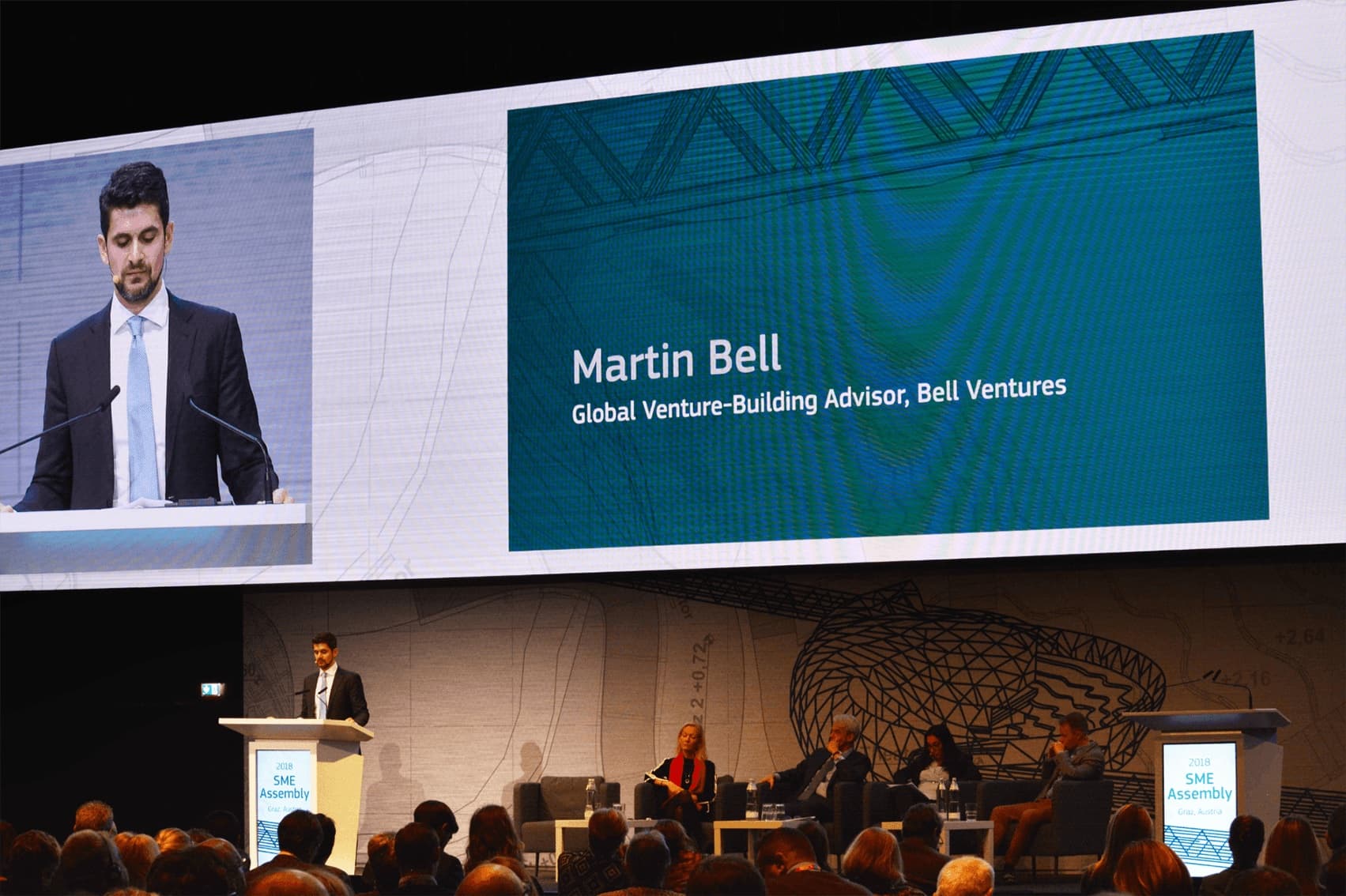
Martin Bell
Founder of 100 Tasks. Martin Bell has launched or supported 120+ startups and turned Rocket Internet venture-building discipline into a step-by-step system used by 25,000+ founders and startups.